
Battery Branch & Dated Diesels
A trip with a difference this time, sampling a new Battery Train in West London, followed by a selection of mainly older Diesel Buses in the North West part of town and across the border into Herts.
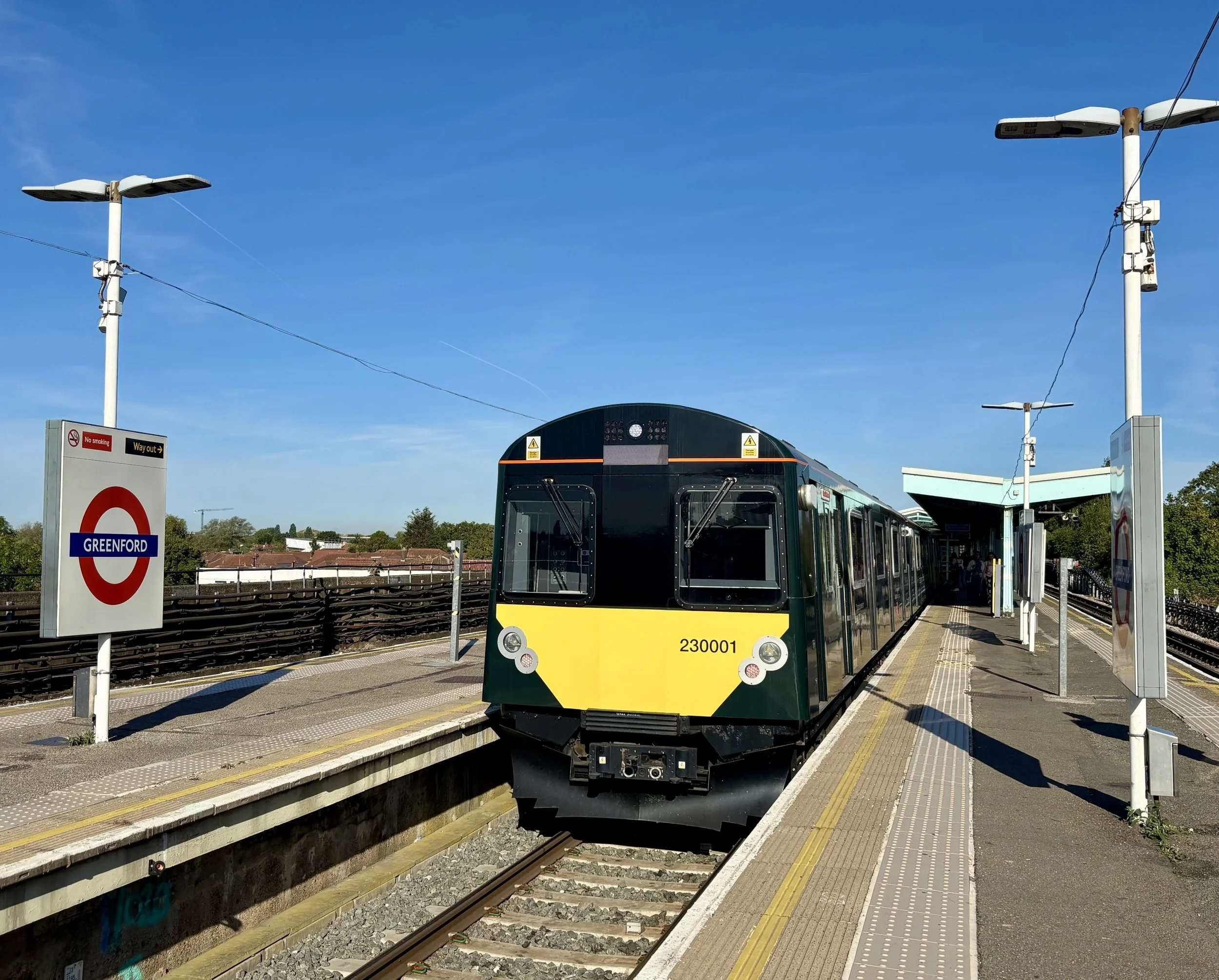
Experimental battery-electric multiple unit 230 001 stands in the central bay platform at Greenford with the Central Line platforms on each side before my ride to West Ealing.
At time of writing, the unit only operates on Saturdays in place of the usual Class 165 DMU, it being unclear if and when it will operate throughout the week.
Train: Greenford - West Ealing
A Saturday morning in August saw me at West Ruislip Station, western terminus of the Central Line, from where I took the train a few stops east to Greenford. This provides convenient interchange with the Greenford - West Ealing branch line, operated by GWR as part of the National Rail network, although oddly the service connects only with TfL rail services at each end - the Central Line at Greenford and the Elizabeth Line at West Ealing - surely a candidate for the London Overground?
The branch was opened in 1903 by the original GWR, with a circular service to and from Paddington via Park Royal & Ealing to serve the Royal Agricultural Show held in the grounds of the Twyford Abbey Estate. In 1904, “normal” services began when the link to Greenford Station was added. In steam days, a “push and pull” operation was in force using a tank engine and a couple of coaches, later replaced with two auto-trailers either side of the engine. During the 1960s & 70s, a two car DMU usually ran the service, although this was eventually replaced with a single carriage “Bubble Car” unit.
Today, services are operated by GWR with a single two-car Class 165 “Turbo” DMU on M-F, with a Class 230 Battery-Electric Unit on Sats. There is no Sunday service. A basic 30 min frequency runs between about 06.00 & 22.00. The first train of the day starts from Paddington, with the last one extended there, all other services run only between Greenford and West Ealing.
Naturally, I was visiting on a Saturday to try out the experimental battery unit, 230 001, converted from former London Underground District Line D78 stock by Vivarail, the aim being to provide a cheaper alternative to electrification on branch lines. I had only about 5 mins to wait before the train glided into the centre bay platform at Greenford, situated between the two Central Line tracks. Boarding with less than a dozen others, I took one of the high backed seats at a table, of which there are several on the train, together with normal seating. There is also a toilet on the unit, unusual for a suburban service, but maybe necessary on longer country branch lines for which such a train is the prototype. In addition to a line diagram of the route above the windows, the former advert spaces in the cove panels had posters explaining how the “fast charge” battery technology on the train worked - more of which later.
We left on time after a 4 min break, making slow progress over the single track beneath the viaduct carrying the Central Line, before turning onto the branch proper at Greenford East Junction, where there is a connection with the New North Main Line in both directions. By now onto double track, we soon reached the first stop at South Greenford, originally a “Halt”, like the other stations on the branch. No-one on or off at this point and we soon left, passing through an area of trees and parkland which gives this suburban line a distinctly rural feel. The section from South Greenford to Castle Bar Park is the longest between stations and the only time we reached any sort of reasonable speed. At Castle Bar Park, a couple on and a couple off, before continuing mainly through tunnel to the next stop at Drayton Green, the character of the line now becoming more built-up and suburban. A handful of passengers exchanged here, before the final section around a sharp curve into the terminus at West Ealing, terminating in bay Platform 5, adjacent to the London-bound Elizabeth Line Platform 4. Just an 11 min trip.
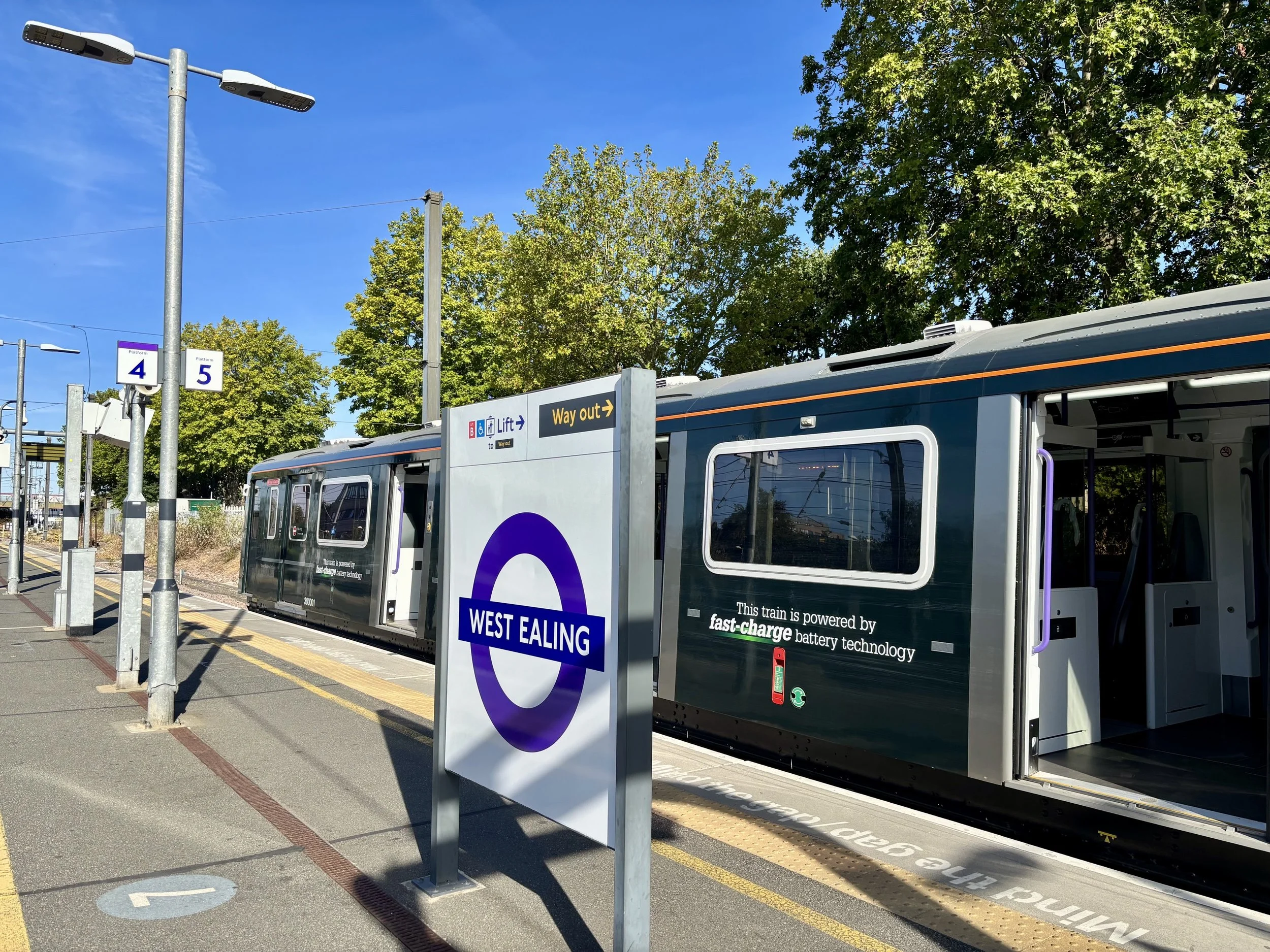
Battery unit 230 001 is converted from former District Line D78 stock and is seen during my extended stay at West Ealing - see text!
Note the legend below the side window stating “This train is powered by fast-charge battery technology”, which is out of sight below the train between the tracks here.
Train: West Ealing - Greenford
The train is scheduled for a 4 min break at West Ealing, during which the batteries are recharged using “fast-charge” rails installed between the running rails in the platform, with charging connectors lowered from the train as it approaches and released when complete.
All appeared to be going well, until the driver announced that there was a problem with a leaking AC unit on the train, which had created small puddles of water on the floor. A cleaner had been summoned to deal with it, but in the meantime the next departure was cancelled! After a few minutes, with no sign of a cleaner, frustrated passengers began taking matters into their own hands and, taking tissues from the toilet, began mopping up the small amount of water themselves. This was completed in less than 5 mins, but we had to await the next scheduled departure time, producing an hour gap in the service.
Luckily, we left on time on the next departure slot 30 mins later, with similar numbers on board to the previous trip. Back the way we had come, calling at Drayton Green, Castle Bar Park and South Greenford, arriving back at Greenford after another 11 min run. An interesting experience, but surely necessary to test the unit in regular daily service before rolling out to other lines. If successful, it is rumoured that the technology could potentially be used on the other GWR Thames branches to Windsor, Marlow and Henley. However, I am quite atonished that Issues like leaking AC units seem to be affecting various types of modern rolling stock, surely this should all have been picked up and dealt with during the overly-extended testing that new trains are now enforced to endure?
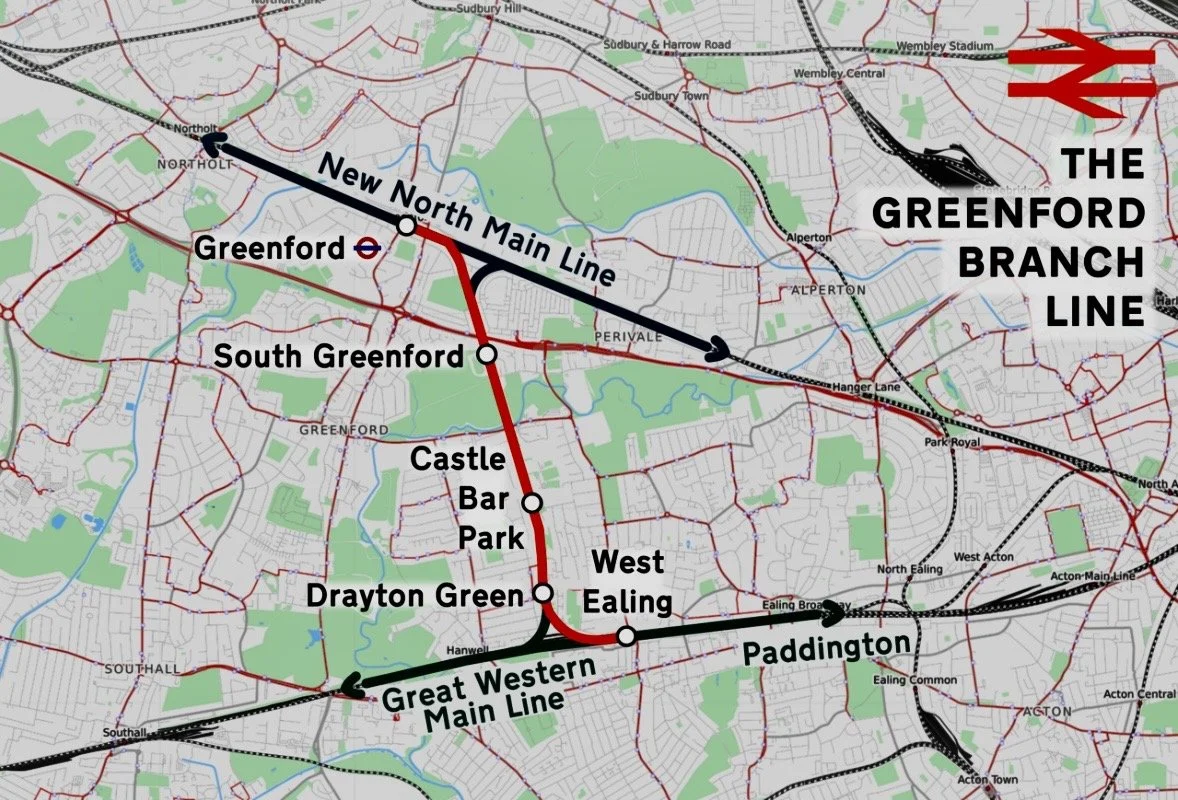
Map of the Greenford Branch Line, showing its location between the GW Main Line and the New North Main Line.
Connections are made at West Ealing with the Elizabeth Line and at Greenford with the Central Line rather than with National Rail services.
Route 105: Greenford - Heathrow Central
Back at Greenford Station, I descended from platform level to the street to begin the bus rides part of my day, starting with the 105 to Heathrow Central. This is a route that I first encountered back in RT days, when it was a lengthier operation from Shepherds Bush to Heathrow. Back in the mid-70s, a good day out could be had by riding the 105 over the whole route to Heathrow, then changing to the 140 for another long RT ride up to Mill Hill Broadway, or the reverse, taking in a large swathe of West London on the way!
Today, the 105 is run by First Bus London, using Volvo Wright Hybrids from Hounslow Heath (WK) Garage, the code reflecting the former “WestlinK” operation from this base. A couple of buses were simmering on the stand around the corner from the station, but VWH45265 was next to leave, so I jumped on with several others. It being still relatively early on a Saturday morning, traffic wasn’t too bad and we trundled down to the Western Avenue, before circling the roundabout into Greenford Road towards the “Red Lion” - although sadly the former well-known pub closed in 2013 and has been replaced by housing. Turning into Greenford Broadway, we continued along Ruislip Road, before turning off into Allenby Road and the large area of suburban housing between Greenford and Southall. In Dormers Wells, it looked like we were in trouble, as we were suddenly confronted with a burst water main in our path and cones across the road ahead with a “Road Closed” sign. Fortunately, the workmen on site had just set up the closure and removed the cones and signs, so that our bus could proceed, the water not being very deep at this time, together with another 105 which had been trapped coming the other way - a lucky escape! Our driver radioed the Controller to explain what had happened, with an immediate diversion put in place for other 105s via Somerset Road and Lady Margaret Road to avoid the closure.
There is often congestion approaching the junction with the High Street / The Broadway at Southall, but not today, as we sailed straight across and along a weirdly traffic free South Road up to Southall Station. We did get caught at the lights in King Street, but only for a couple of minutes or so. Along Western Road to Wentworth Road, where we had a lengthy 7 min stand for early running, this route having a ridicously padded timetable. After some agitation from passengers, we got going again, continuing through Heston down to Cranford, where we turned onto the Bath Road. Normally a fast section, we stopped at most stops between Cranford and Heathrow North, with a large number of airline travellers joining us at Harlington Corner. Then we were onto the slip road and into the tunnel under the main runway to Heathrow Central Bus Station, where we disgorged practically a full load. 1h10m from Greenford, although the schedule indicated around 15 mins more.
The 105 was a traditional route linking Shepherds Bush and Southall via the Western Avenue and Greenford, which later gained an extension to Hayes, initially on Sundays only, but becoming Daily in 1958. It operated RT, RTL and RTW types at different points from the late 1940s onwards, although standard RTs reigned supreme by the mid 1960s. At the Hayes end, it gained extensions to Hayes North and then Charville Lane Estate at different times, although in 1971 it lost the projections beyond Southall in favour of reintroduced route 195, which the 105 had originally replaced over this section. It was in 1973 that the extension was added from Southall to Heathrow Central, with a bifuraction added 2 years later to Southall Havelock Estate, strangely not using the obvious suffix number 105A. This is the period in which I rode RTs on the route, the allocation then being split between Shepherds Bush (S) and Southall (HW) Garages.
The RTs were replaced by spare RMs in April 1978, although OPO was on the horizon, coming in 1983 after a short period in which the Metrobuses used were operated in crew format. In 1986, the main service was extended to Heathrow Terminal 4, which lasted only around 3 years. Meanwhile, in 1988, the Havelock Estate birfurcation came off and was transferred to new Route E5. The next major change was in 1992, when the Shepherds Bush - Southall section was hived off to the 95, the 105 now running only between Greenford Station - Heathrow Central, except on Suns when the through service continued to run on the 105 from Shepherds Bush to Heathrow. By the mid-90s, the 105 was operated by First Challenger and was converted to MA midibus operation, a bizarre choice for such a busy route.
Tendering in 1996 saw the route pass to London & Country, when the Sunday operation to Shepherds Bush finally ended and the 105 became Greenford - Heathrow daily, the situation which still exists today. L&C used low floor Plaxton Darts, but not for long, as later the same year the route reverted to First Centrewest with DML Dart Marshalls, although the contract was later novated within First Group to London Buslines. Double deckers returned in 2004 with TN Trident Plaxton Presidents. Next to have a go on the route was Metroline, which took over in 2011 using VW Volvo Wright B9TLs. After one 7 year term, London United assumed control in 2018 with the current VH hybrids, although ownership passed from RATP Group to First Bus in 2025. The contract was reawarded for 5 years from June 2025.
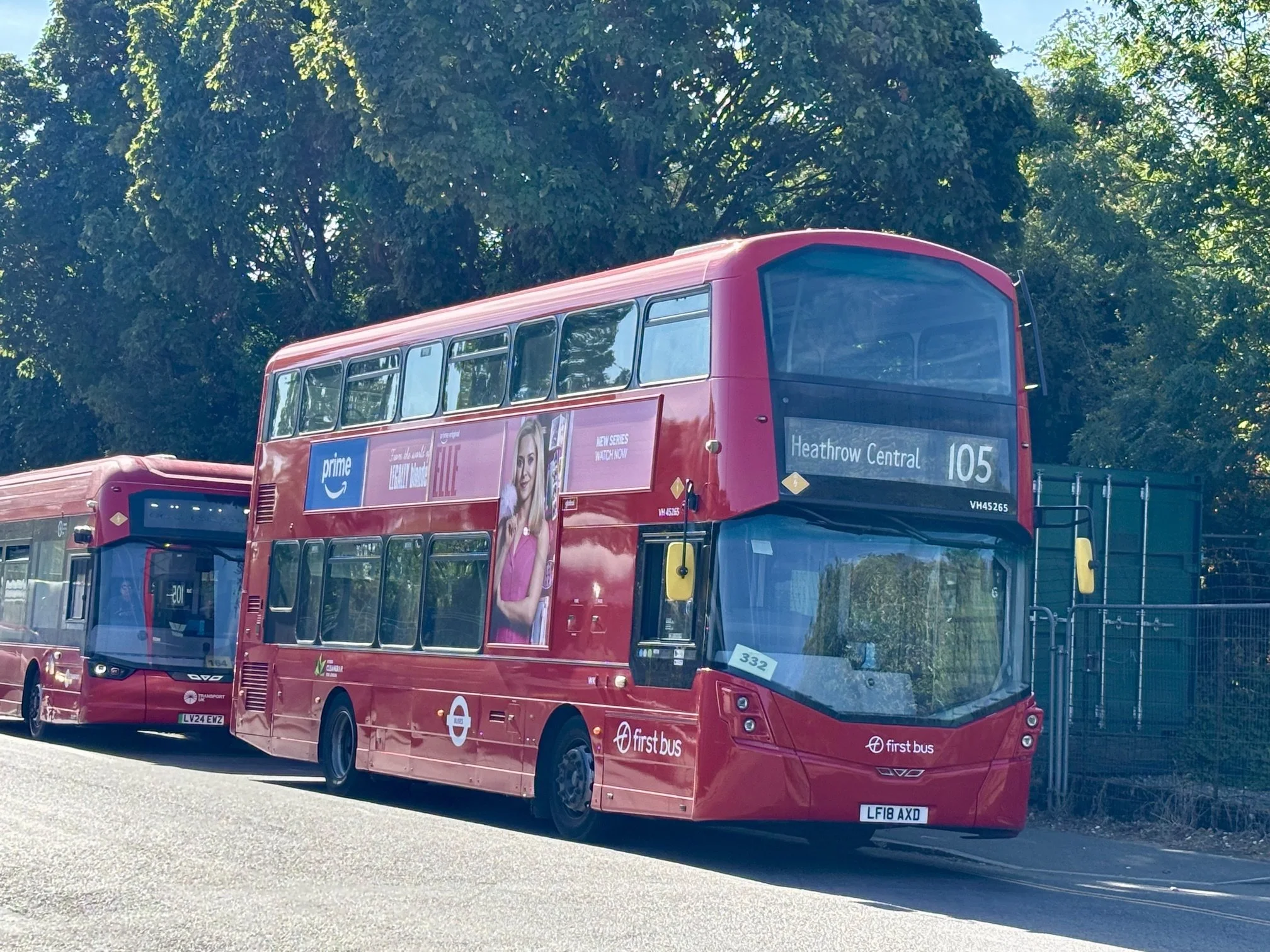
First Bus Volvo Wright hybrid VH45265 of Hounslow Heath (WK) Garage at Greenford Station on the 105 before I rode it to Heathrow Central.
This is one of the final batch of the type delivered to London United when it was part of the RATP Group and now under First Bus London ownership.
Route 350: Heathrow Terminal 5 - Hayes ASDA
At Heathrow Central, I was able to take advantage of the free inter-terminal rail service on the Heathrow Express from Terminals 2 & 3 to Terminal 5, which took only a few minutes. Ascending to the adjacent Bus Station, I awaited the next departure on TfL route 350 to Hayes. This is operated by Transport UK with dual door Enviro 200 MMCs, but first to arrive was the spare bus, a short single door “classic” Enviro 200, fleet no 8125, the only example at Dawley Road Hayes (DH) Garage. No blinds had been fitted and it seemed unlikely that they would be, as a simple route number was glued to the front windscreen on the nearside.
Half a dozen of us boarded at T5 and we made a quick getaway around the Western Perimeter Road of the airport and out via the “Bus Only” road onto Stanwell Moor Road and around the Colnbrook By-Pass. However, due to roadworks closing the direct route through Harmondsworth, we went on a long diversion east along the Bath Road to Heathrow North, then north via the M4 Spur Road, before turning west into Holloway Lane, rejoining line of route just beyond Harmondsworth. We then continued along Harmondsworth Road, over the M4 and into West Drayton, with a double run to serve the station.
After a short distance along the High Street, we turned right into the freehold section along Horton Road, dropping off and picking up at stops until arriving into Stockley Park, the modern business estate being on a site which was formerly used for brick production plus sand and gravel extraction. The resulting pits were later filled with waste and landfill before the area was built on. Shortly after leaving the park, we arrived at the stop adjacent to DH Garage, where we paused for a rapid driver change. From here, it was only a short hop via Botwell Common into Hayes Town, where we dropped off our passengers at various stops before terminating at Fairey Corner, just past the station and opposite ASDA, after a 50 min trip.
This is the second use of the 350 number in London, the first incarnation being a route from Harrow Town Centre to Watford Junction via North Harrow and Headstone Lane between 1988 and 2006. Unsually, it was not a TfL contract as such, but a HCC one with funding from TfL in the London area. Operated mainly with Darts from Garston (GR) Garage by London Country North West, it later passed through Luton & District ownership to Arriva. Upon withdrawal, it was replaced within London by Routes H18/H19, but the through link to Watford via this corridor was lost unfortunately.
The present 350 emerged in 2008 as a service between Hayes Clarendon Road & Heathrow T5, replacing the former H50 with an extension between West Drayton and the then new T5. The only significant route change came in 2017 when it was diverted between Stockley Park & Hayes via the U5 and extended to Hayes ASDA. Initially operated by Travel London with Enviro200s, it passed through the subsequent ownership of Abellio to the present Transport UK. There was a double deck period from 2012-17 using Trident Alexander 400s and then Enviro400H MMCs, although single deckers then returned using mainly Enviro200 MMCs.
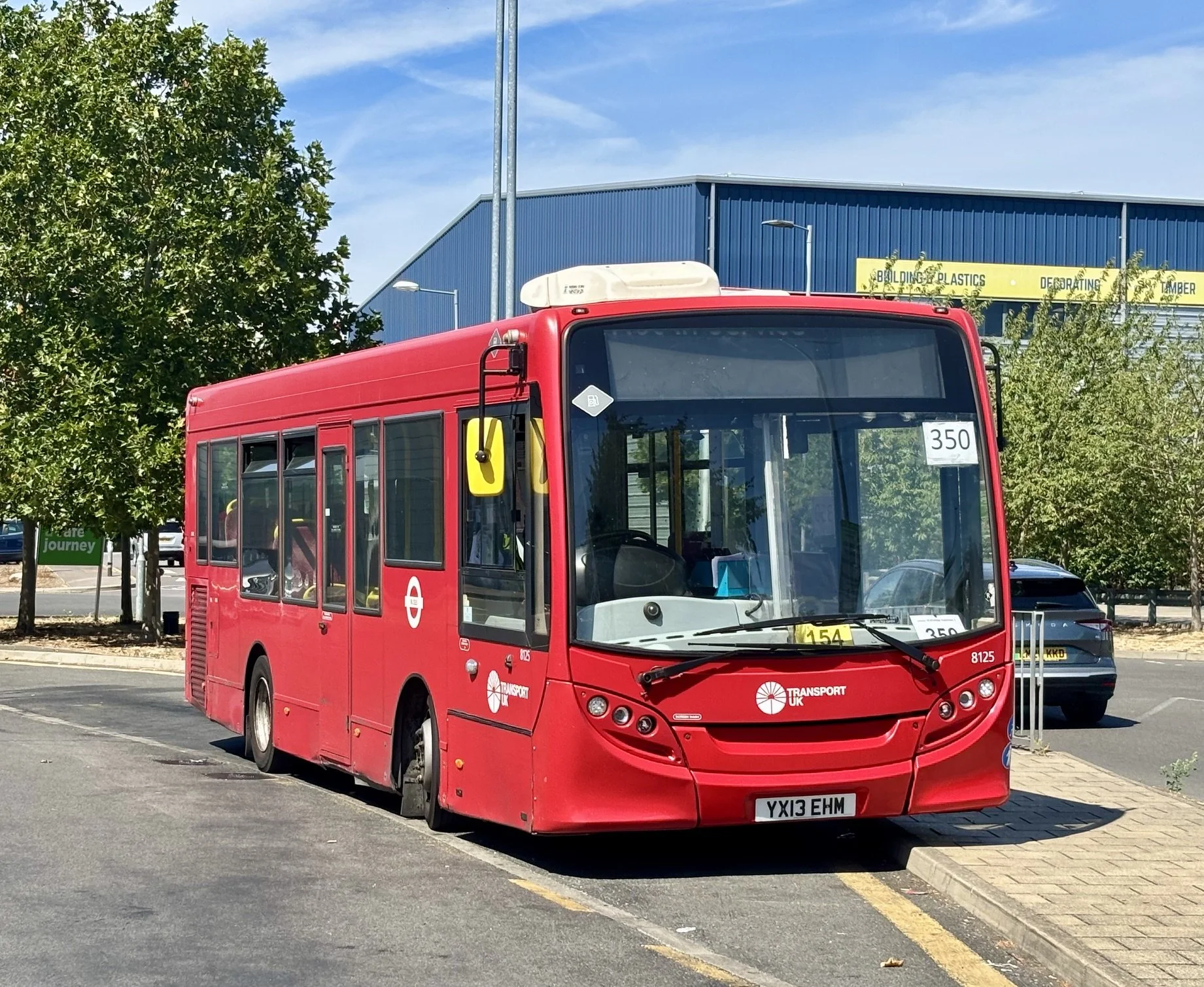
Classic Enviro200 no 8125 at Hayes ASDA on Route 350 after my ride aboard from Heathrow T5. This is a unique bus at Transport UK’s Dawley Road Hayes (DH) Garage. Note the route number, which is glued to the windscreen, no blinds being fitted to the vehicle for this service.
The majority allocation on this route comprises longer two door Enviro200 MMC types, so this is the unusual choice of spare vehicle.
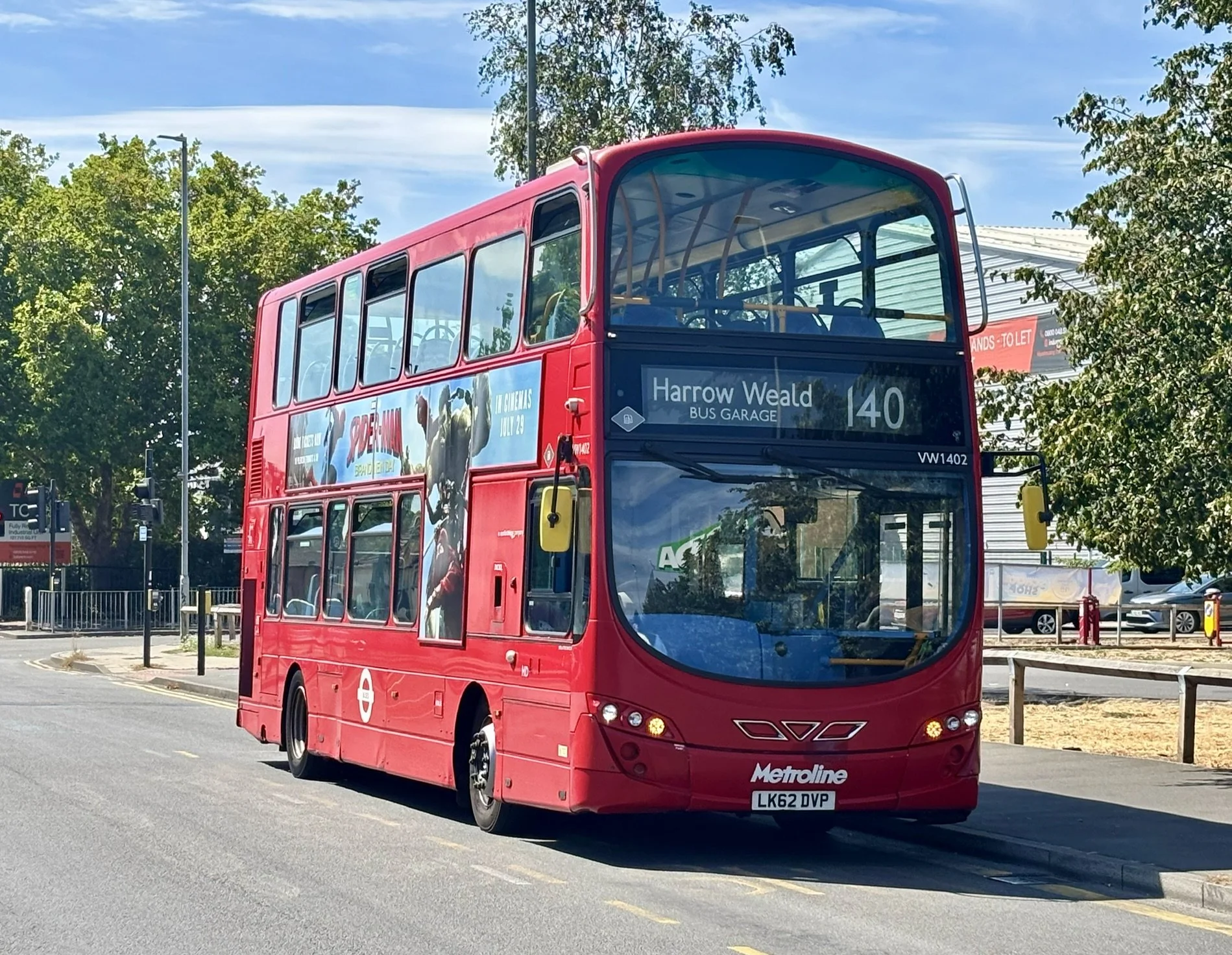
Metroline Volvo Wright B9TL VW1402 is parked at Hayes ASDA before a trip to its home garage at Harrow Weald (HD) with me aboard.
HD has around a dozen diesel VWs, mainly intended for the 258, but one or two a day appear on each of the 140, 183 & 186. This was the only one on the 140 on this day.
Route 140: Hayes ASDA - Harrow Weald
For the afternoon, I switched my attention to the remaining few diesels operated by Metroline out of Harrow Weald (HD) Garage. There are around a dozen Volvo Wright B9TLs left there, with one or two per day turning out to support the majority hybrids on each of routes 140, 182 & 186. Having done the latter two routes reasonably recently, I was conveniently placed at Hayes to sample the first of these. Also, as luck would have it, just as I arrived into Hayes on the 350, I espied VW1402 immediately ahead on the 140, which terminated at ASDA at more or less the same time as us. Very fortunate timing, as LVF showed this to be the only VW on the route that day.
There was already a VWH ahead on the 140 stand, which departed as I arrived, leaving an 8 min wait for the VW on the next working. This was my first time on the route since it was cut back from Heathrow to Hayes, although I could not believe that was as long ago as 2019! I duly boarded with the throng and as we made our way past Hayes Station and through the town centre, I reflected on how I used to ride the 140 back in RT days all the way from Heathrow to Mill Hill via Harrow, often changing at Hayes from a full bus onto an empty one on one of the “shorts” that started from Hayes Station so as to get my coveted downstairs front seat.
Back to the present and we continued through Hayes Town without too much delay and onwards towards “The Grapes” where we crossed the Uxbridge Road. These days, “Superloop” SL9 provides the Heathrow - Harrow link on a limited stop basis, but there still seemed plenty of takers for the “all stops” 140 over the common section. Although a main road route, much of it over dual carriageway, the introduction of 20 mph limits has slowed down the service - needlessly in my view, as much of this stretch has few pedestrians and does not have any physical restrictions that would predicate a lower speed.
Onwards through Yeading and on to Northolt, passing over “The Target” roundabout and calling at Northolt Station on the Central Line. Then up via Northolt Park to South Harrow, before taking the dog leg around Shaftesbury Avenue, Porlock Avenue and Lascelles Avenue, serving the housing estate, before returning to Bessborough Road and arriving into Harrow Town Centre. We circled through the Bus Station and continued on towards Harrow & Wealdstone Station, before traversing Wealdstone High St and terminating just short of Harrow Weald Garage. A fairly decent 65min run in total.
The 140 was the traditional route linking Mill Hill and Hayes via Harrow for many years. It was one of those to operate the RTW type during the 1949-51 period when they were restricted to suburban routes with wide roads, before being reallocated to their intended Central London services following suitable results from tests carried out in liaison with the Metropolitan Police. RTLs also appeared as a part allocation for a short time in the early 50s, but the main type soon became the standard RT, with which the 140 was to be associated until the late 70s. In 1955, the route was diverted from its Hayes Bourne Avenue terminus (replaced by the 204) and rerouted to London Airport Central (as it was then known). In the 60s, certain M-F school journeys were extended to/from Mill Hill Page St or Mill Hill East Station, whilst from 1972 two Sunday afternoon journeys in each direction were diverted via Cherry Lane Cemetry between Hayes & Heathrow. The Mill Hill extensions came off in 1983 and the Cherry Lane journeys in 1990. Meanwhile, the original plans for the 140 to be the last RT route in London in October 1978 were changed, when this was swapped with the 62 at Barking and RMs replaced RTs on the 140 in July 1978.
OPO came to the 140 in 1983 with Ms, at which point the route became Harrow Weald to Heathrow, the Mill Hill - Harrow leg passing to the 114 instead. In 1985, the service was extended to/from Edgware to replace the 286, initially just on Sunday, but later that year becoming Daily. At the other end, as with the 105, the route was extended to Heathrow Terminal 4 in 1986, although this only lasted until 1989. With the introduction of the “Harrow Buses” scheme in 1987, the Harrow to Edgware section was replaced by new derivative route 340. This period also marked the replacement of the original Ms with a motley collection of secondhand Greater Manchester Atlanteans and Volvo Ailsas, although the arrival of Mark II Metrobuses after a while provided some relief. In 1990, the route transferred to London United under a new contract, operated from Hounslow (AV) Garage, but reverting to original Mark I Ms in the process.
The 140 returned to its old home at HD Garage in 1999, with Metroline by now the operator at that shed, although this time with low floor double deckers. After short periods with TA and TPL types, the allocation settled on VPs, which continued untl 2016 when VWH hybrids took over as the principal type, although a few VPs lingered for a while until these were replaced by a small number of VWs, which is still the case at time of writing.
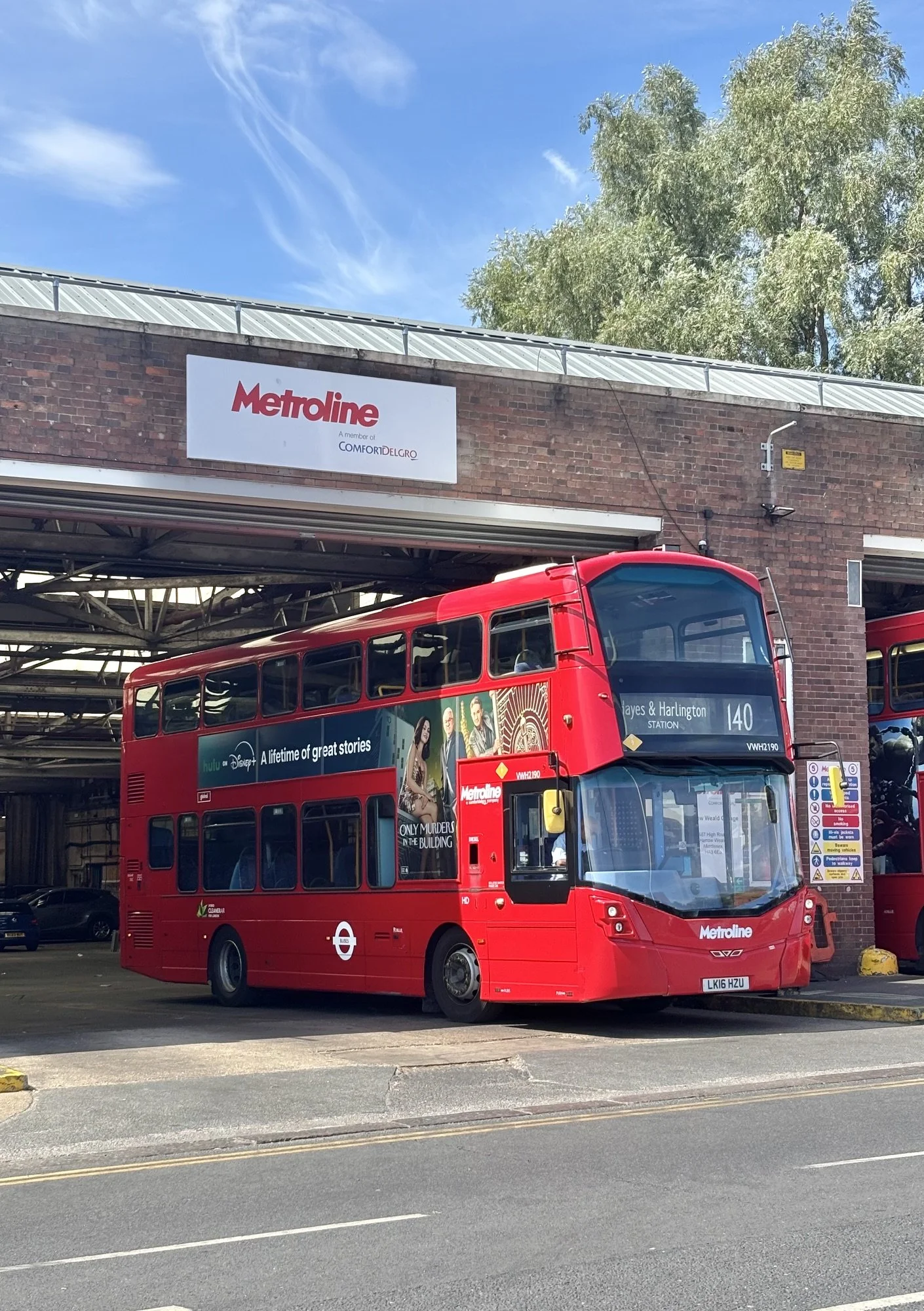
At the other end of the 140, we see Volvo Wright Hybrid VWH2190 preparing to leave Harrow Weald Garage on its next trip to Hayes.
Not a bus I travelled on, but included to illustrate the main allocation on the route. This is one of the later version of the type with angular front end and revised windscreen design.
Part Route 258: Harrow Weald - Watford Junction
My final full route of the day continued the diesel theme with another VW ride, this time on the 258, my first time on the class on this route since it transferred to Metroline on re-tender in early 2025. The 258 is intended for VWs, but usually is a mix of VW & VWH types. The next northbound bus at the home garage (HD) was a VWH, so I awaited the second one, which turned out to be VW1398.
Jumping on, I found it to be surprisingly full, but found a seat upstairs. As we made our way up Brookshill and Common Road through the pleasant countrified section of the route, our old VW seemed to be struggling a bit with the gradient, quite unusual in my experience on the class, although each example has its own characteristics. Arriving at “The Alpine” cross-roads, we turned left into the long main road section through Bushey Heath to Bushey, running in parallel with the 142 from this point. Eventually, we reached Bushey Station, where we called before continuing under the West Coast Main Line at Bushey Arches and around the one way system up to Watford High St Station. Most of our crowd alighted in the town centre, but I stayed on with a few others to loop around to Clarendon Road and along to the terminus at Watford Junction. A reasonable 35 min journey.
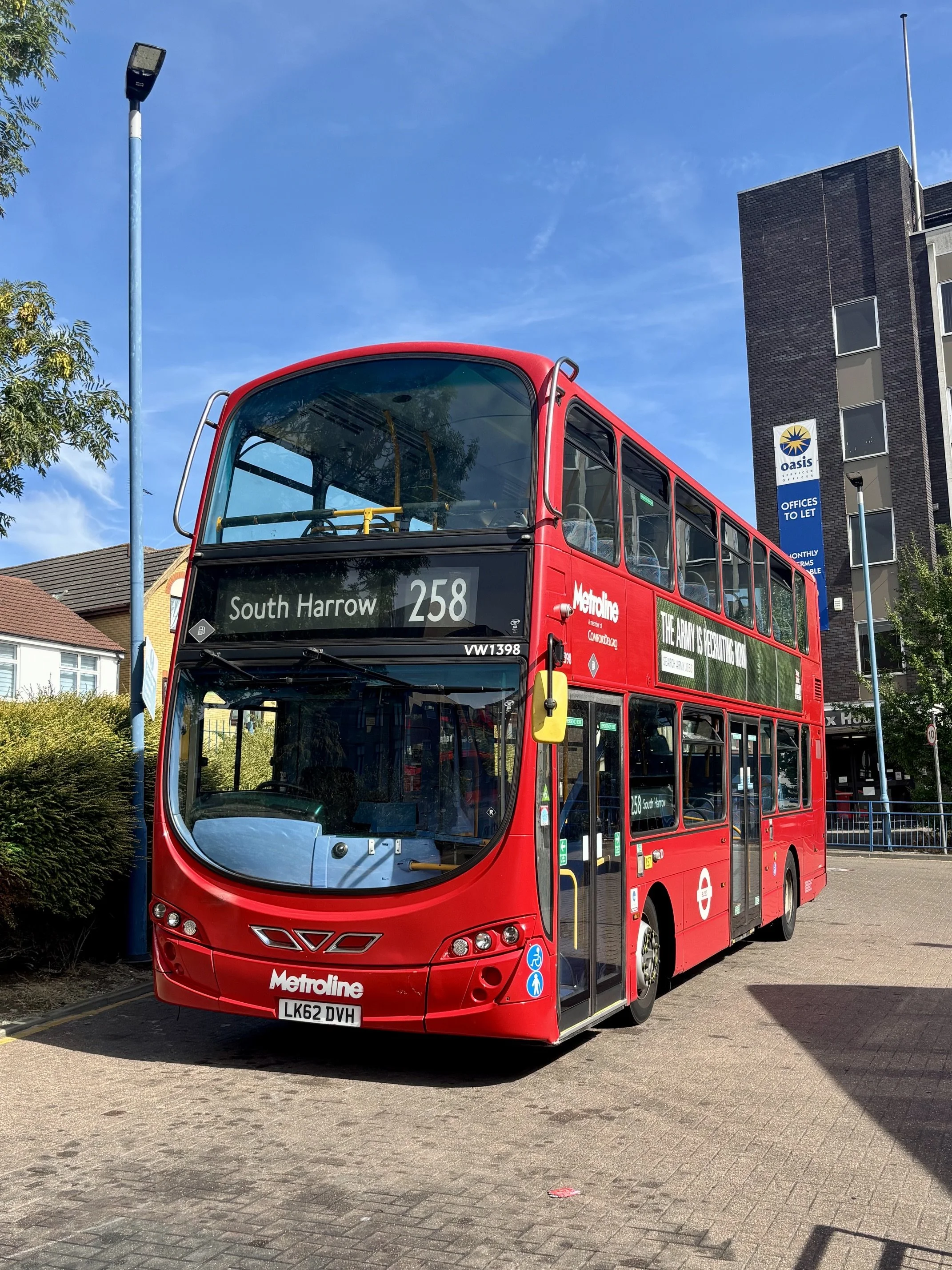
My second VW ride of the day was on VW1398 (also of HD Garage), seen at the end of my trip at South Harrow Bus Station. This was my first time on the type on the 258 since it passed from London United to Metroline in early 2025.
This is now the intended main allocation of the VW class at HD, although odd examples escape onto other routes as mentioned above.
Route 258: Watford Junction - South Harrow
The 258 has a 15 min frequency on Sat daytimes when I travelled, so when I saw another bus leaving Watford Junction just before we arrived there, I assumed our bus would be the next departure. However, there was a VWH ahead of us on the stand, so it appeared that we were the second departure after a lengthy 25 min stand time, during which I was able to watch comings and goings on local Watford services including Arriva 321 (now with brand new Enviro400 MMC deckers) and the Warner Brothers Studio Tour shuttle bus (with triple decker window vinyls!) which was doing a roaring trade.
I reboarded VW1398 at the scheduled departure time for an easy southbound run. Not too busy on this trip, whilst earlier traffic queues around Watford and Bushey seemed to have dissipated, enabling us to make good progress. Back through the town centre, then down to Bushey Arches where we did the obligatory loop around to serve the station. Then a bit of a slog uphill into Bushey itself, before continuing on via Bushey Heath to “The Alpine” junction once again. Incidentally, the Alpine was latterly an Italian Restaurant, not a pub, which was a well known local landmark and popular eatery which closed in 2016.
By now, we were a little early on the schedule and descended through the greenery of the wooded section via Clamp Hill to Uxbridge Road at a gentle pace, before taking a couple of minutes to await time at Uxbridge Road. Back at HD Garage, a driver change, before continuing via Wealdstone to Harrow Town Centre, with a double run to serve the Bus Station. From this point, just a few passengers remained on board and we climbed Harrow Hill past the famous Harrow School, the area being largely deserted during the summer holidays. It was then a short descent the other side down into South Harrow, terminating at the station after a run of a couple of minutes over the hour from Watford.
I covered the history of the 258 in my article “Haring Around Harrow” dated 27/01/25, just before the route passed from RATP Group to Metroline on re-tender and thus returned home to its original garage. However, it may be interesting this time to reflect on the “pre-history” of the 258, the Watford Junction to Harrow corridor being served for decades by the 158, which continued on via South Harrow (direct) to Ruislip Lido, before being diverted to Rayners Lane in 1966. In 1970, this RT route was truncated to operate between Harrow Weald & Rayners Lane only, with new OPO Route 182 taking the Watford Junction - Harrow leg with MBs and running on to Wembley. In 1971, the remaining rump of the 158 was withdrawn, being replaced by changes to the H1 and 114. Meanwhile, in the same year the 182 was cut back to run no further north than HD Garage when the 258 was introduced over the Watford - Harrow section.
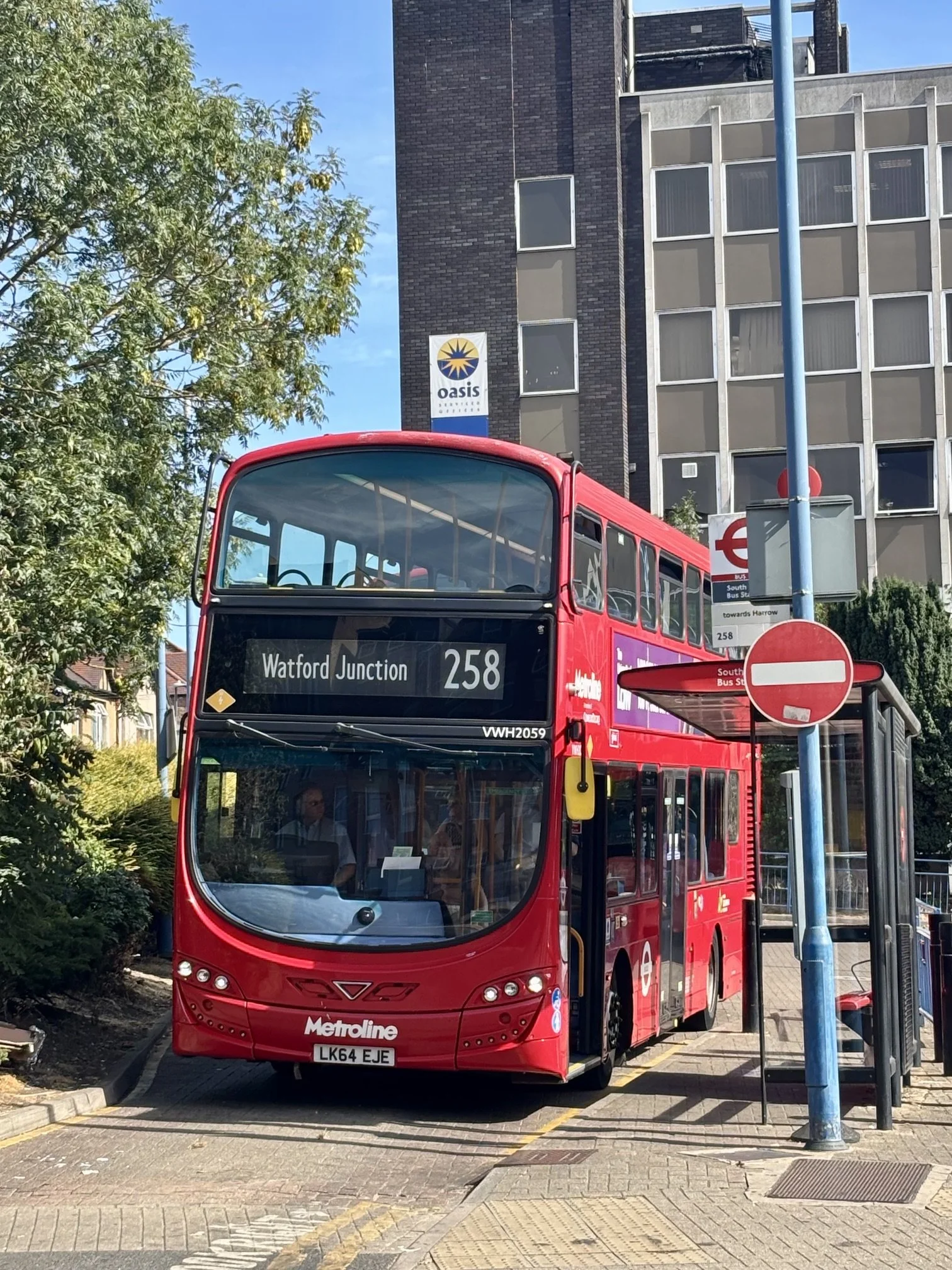
With VWs for the 258 appearing on other routes at HD Garage, the reverse situation occurs with VWHs popping up on the 258. VWH2059 proves the point at South Harrow Station before departing for Watford Junction.
In contrast with VWH2190 pictured earlier, this older example has the traditional rounded front and windscreen.
Part Route SL9: South Harrow - Northolt
At South Harrow, I needed to regain the Central Line at Northolt, so had the choice of a 140 or SL9 to reach it. Next to arrive was First Bus BCE47124 of Harrow (SO) Garage on the SL9, not a Superloop liveried one, but a standard red example normally found on the 183. Nevertheless, it took me the 2 stops on this express service to Northolt Station in less than 10 mins, so a swift journey.
There, I crossed the road to the station and took a westbound Central Line train back to my start point at West Ruislip, completing my rides for the day.
Watton
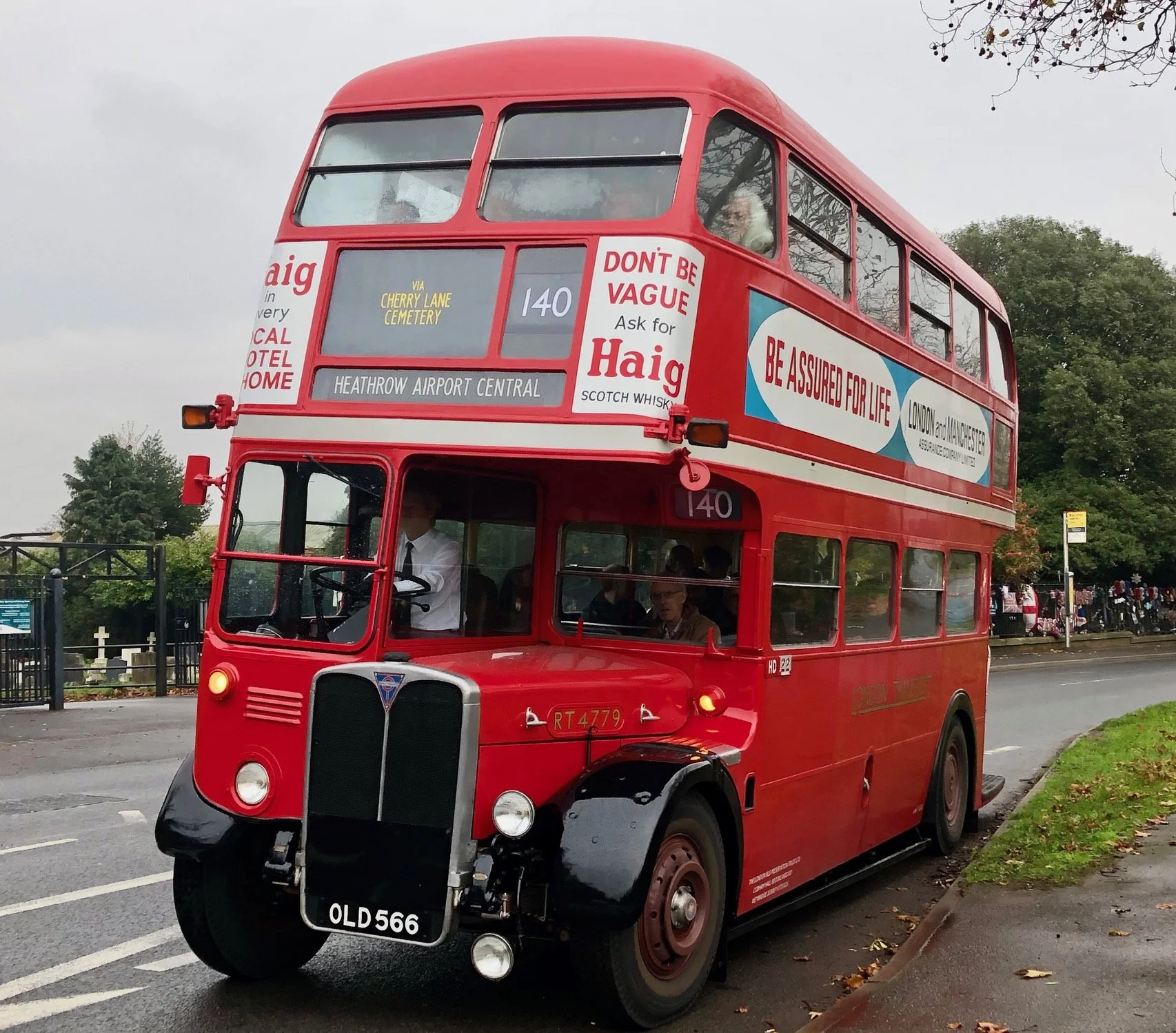
We end with a flashback to the London Bus Museum organised Running Day in November 2019 to commemorate the traditional 140 through route from Harrow Weald to Heathrow Central, shortly before it was cut back to Hayes.
RT4779 is seen at Cherry Lane Cemetry, which a couple of Sunday afternoon journeys in each direction were diverted to serve en route until withdrawn in 1990. RTs lasted until July 1978 on the 140, making this the last route in North West London to host the type.
