
Heritage Bus Running Day: Golden Rover
Watton goes green with a visit to the Epping Ongar Railway’s Classic Bus Event at North Weald Station, featuring rides on specially created routes in the local area aboard former London Transport Country Bus vehicles.
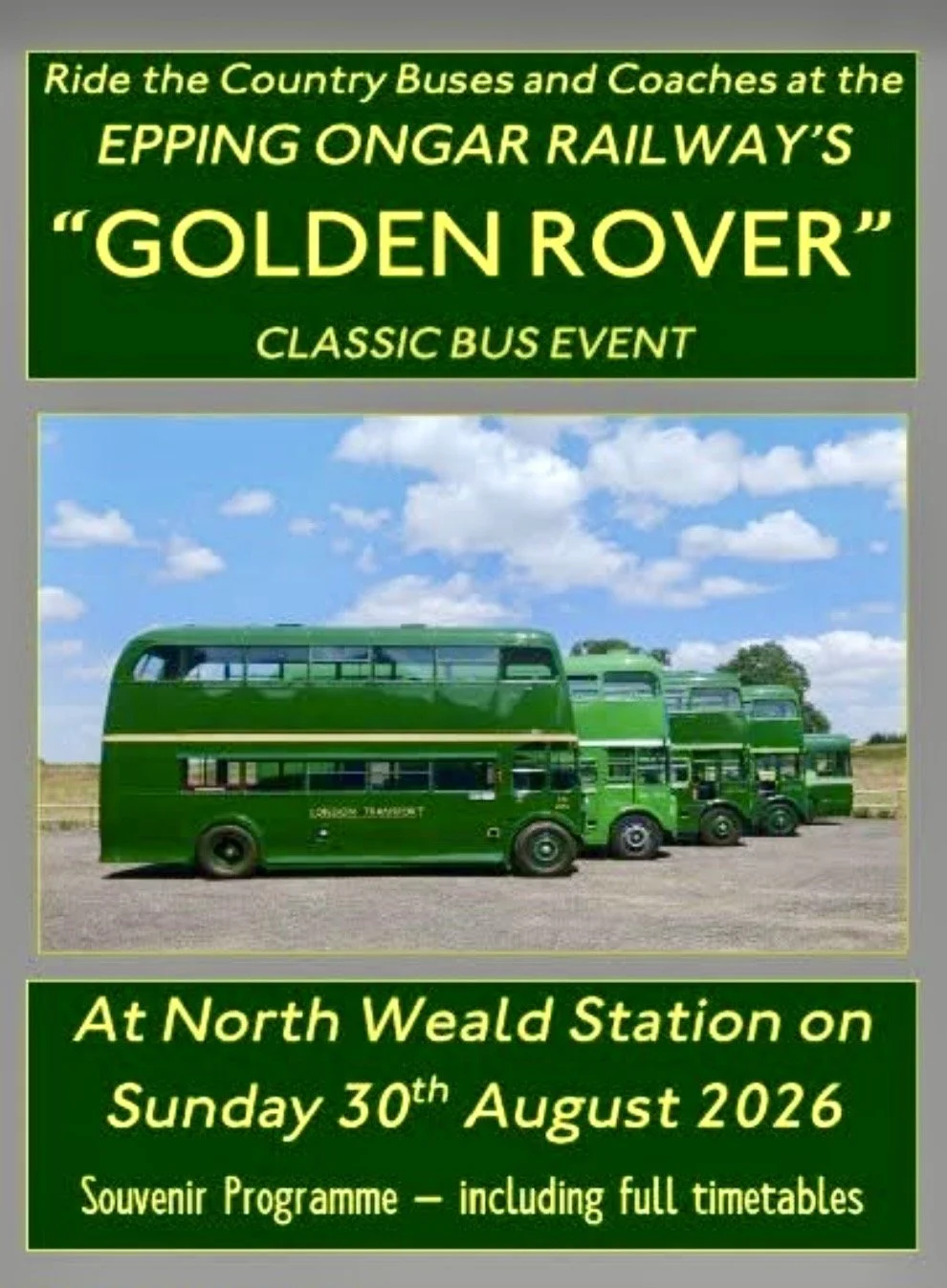
Cover of the programme issued for the EOR’s Golden Rover classic bus event held at North Weald Station. This included full timetables for all the special routes, a map, plus articles on Epping Garage and the history of the Epping - Ongar railway line.
The line up of preserved Country Bus and Green Line vehicles on the cover photo includes STL2692 nearest the camera.
Golden Rover was a day ticket available on London Country Buses & Green Line Coaches in the early 1970s, so an appropriate title for the event.
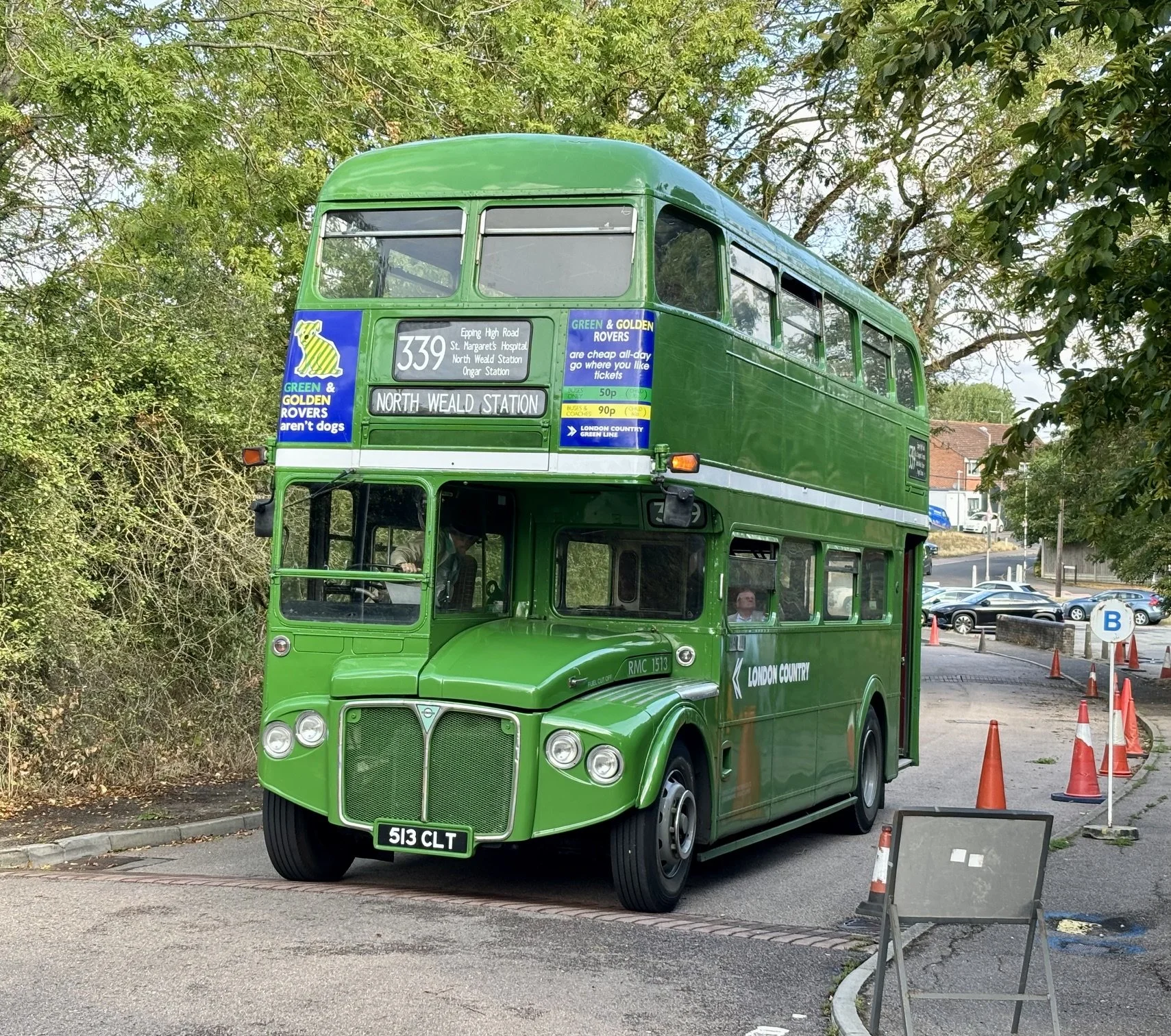
My first ride of the day was a short trip from Epping Station to North Weald Station on the regular Summer Sunday 339 service operated by the EOR. RMC1513 is seen on arrival at the latter location.
This vehicle is preserved in London Country condition with leaf green National livery and white fleetnames.
Part Route 339: Epping - North Weald
The day began at Epping Station, where I arrived in time for the first departure of the morning on the Epping Ongar Railway’s connecting bus to North Weald Station, the 339. Routemaster Coach RMC1513 in leaf green “National” livery was the allocated vehicle, a small number boarding with me for this journey, which was not shown in the published timetable and operated 25 mins in advance of the official first bus.
Just a 10 min journey via Epping High Street, then out past St Margaret’s Hospital and through the outer reaches of Epping Forest, before arriving into North Weald, where a dolly stop was in place as an alighting point in the approach road to the station. After obtaining a programme at the entrance, I was able to spend some time viewing the buses already on display around the site, before commencing my rides on the special bus services which were operating in the local area for this day only.
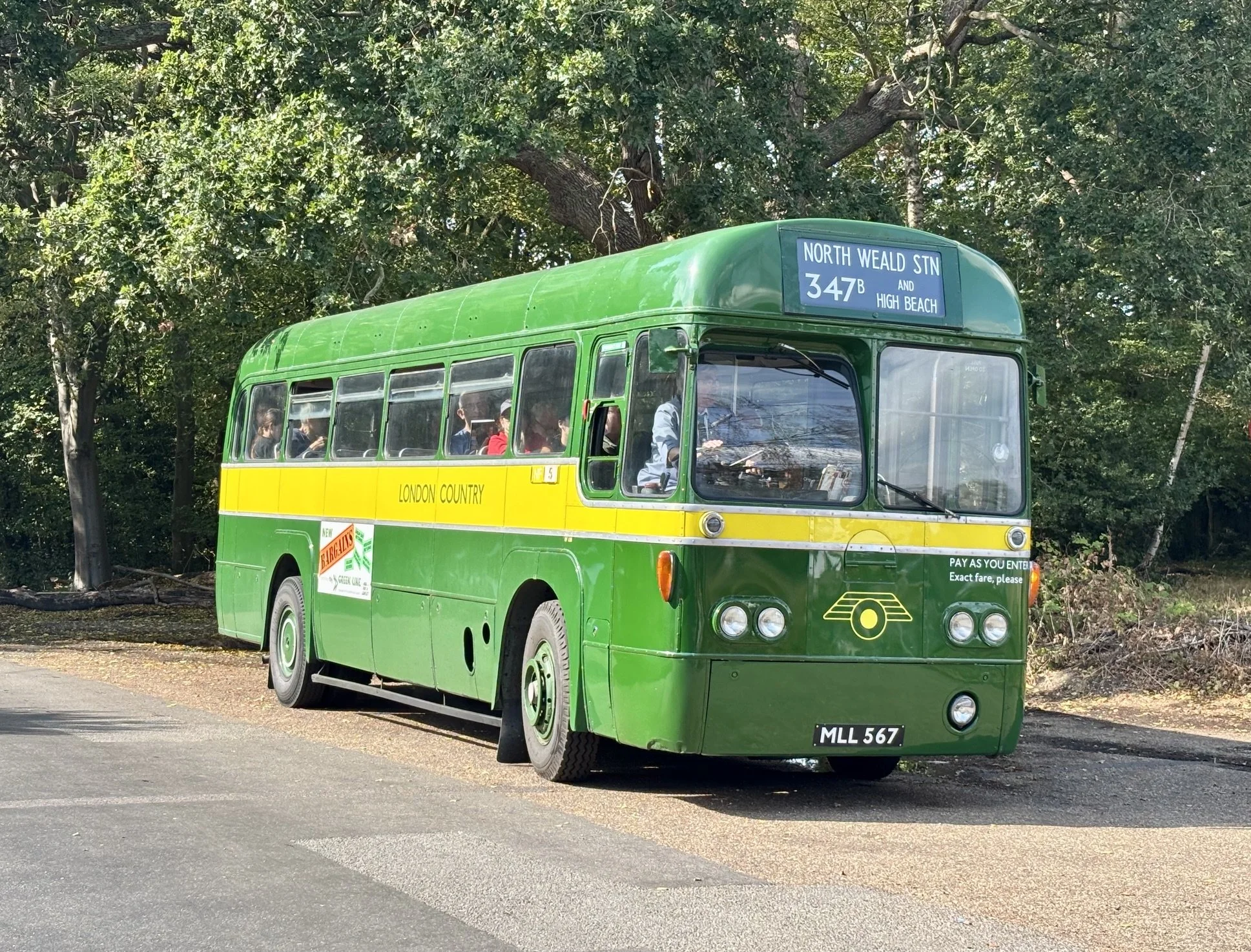
The 347B was the first of the special routes created for the Running Day that I rode. RF180 is seen at High Beach “Kings Oak” PH before returning to North Weald.
This bus is one of those modified for Green Line in the mid 60s with twin headlights, non-opening windscreen and aluminium trim, plus refurbished interior. The London Country livery with canary yellow band looks smart.
Route 347B: North Weald - High Beach - North Weald
I began with some single deck action, taking former Green Line RF180 for the first trip of 5 for the day on the 347B to High Beach and back. This bus was a former Green Line example which had been modernised in 1966/7, the interior featuring grey decor and flourescent lighting, both of which were fashionable at the time. Outside, the vehicle was smartly attired in London Country green bus livery with yellow relief band. The route itself was an invention for the event, although the number 347 was once associated with an Eastern National route in the Ongar area.
A fairly strightforward run, back through the woodland to Epping, before continuing south past the site of Epping (EP) Garage, now a Tesco store. Reaching the larger section of Epping Forest, progress was retarded slightly by a number of cyclists out for a Sunday morning ride, it being difficult to overtake them on the fairly narrow main road with traffic coming the other way. At the “Wake Arms” Roundabout, the pub that was once a terminus for red RTs on the 217A (M-S) and 205A (Suns) has been replaced by a steakhouse, but we continued along Epping New Road through the forest to the “Robin Hood”, where we swung a sharp right up the narrow winding lane to our destination of High Beach, pausing a few minutes at the “Kings Oak” for a photo stop. Until 1964, red RTs used to reach this point on a Summer Sat/Sun PM extension of the 102 from Chingford to High Beach, but there is now no regular bus service here.
We returned to the “Wake Arms” in a loop through the forest, avoiding the oncoming cars in the narrow lanes, before swinging right at “The Woodbine” for a crawl up Woodredon Hill. It was then a fast run via the reverse of our outward route, through Epping once again and back to North Weald Station. A round trip of about an hour.
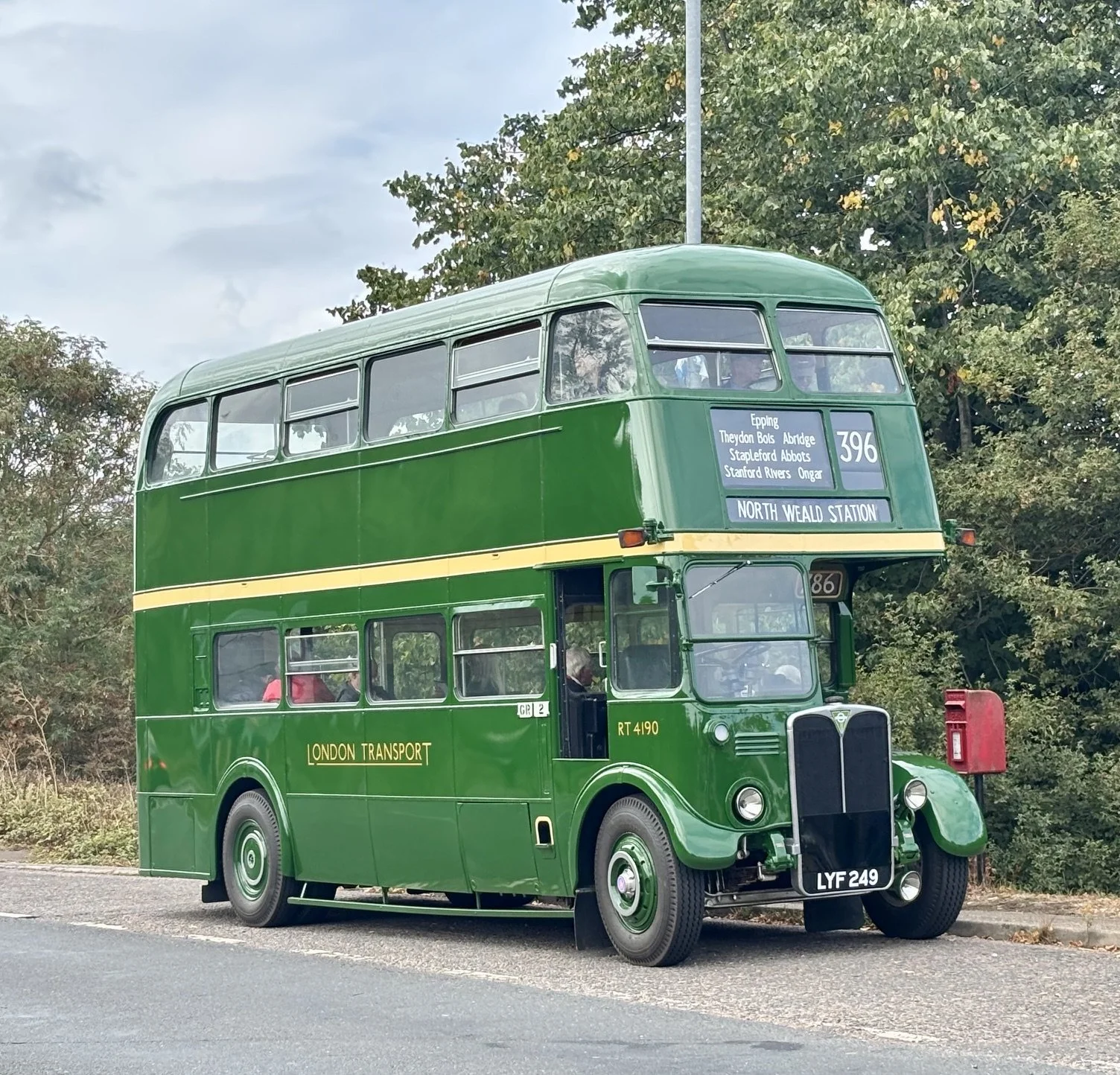
RT4190 takes a break at Passingford Bridge on the circular 396, which ran anti-clockwise from North Weald via Epping, Abridge and this point, before continuing via Ongar back to North Weald.
This particular bus has only just been restored and returned to passenger service. It began life as a green bus in 1951, but was repainted red, being one of the last in use on the 62 at Barking Garage. After being preserved in 1979, it ended up with the London Bus Company.
Route 396: North Weald - Epping - Passingford Bridge - North Weald
Next on the list was the double deck element of the Running Day, for which two special circular routes numbered 396 (anti-clockwise) & 397 (clockwise) had been created, starting and finishing at North Weald Station. These featured two RTs, one STL and one RML, operating at 45 min intervals each way round. The route numbers were once familiar with the area back in LT and LCBS days, although not over the Running Day routeings, as the original 396 ran between Epping & Bishops Stortford and the 397 between Harlow & Bishops Stortford, over which I travelled several times by Green RT in the early-mid 1970s.
This time, I joined RT4190 at North Weald Station on the 396 with owner Roger Wright in the driving seat and a good crowd on board. My first time on this particular RT, which had only just returned to public service after renovation. Soon we were on our way around the circular route, passing North Weald Airfield and back through the forest to Epping Town. Once again, we continued south, this time at a good speed to the Wake Arms, where we paused for a couple of minutes due to early running. Then, a sharp left through more of Epping Forest to Theydon Bois Green and over the bridge crossing the Central Line to Abridge. Crossing the narrow bridge into the village, we turned left near the “Blue Boar” PH where red RTs on the former 167A route operated by Loughton (L) Garage used to reverse and stand, another fond memory. Continuing on past Stapleford Aerodrome, where flying lessons in small aircraft are offered, we reached the roundabout at Passingford Bridge, the “middle of nowhere” destination that is the terminus of the infrequent TfL Route 375. Here, we had a scheduled 5 min “hesitation” to enable photographs, which was timetabled to coincide with the 397 operating the other way round the loop, so we were soon joined by RT4188 which pulled up on the 397 opposite.
After the break, we continued on our way via Stanford RIvers up to Ongar, once the preserve of LT Route 175, then 175A and finally the 247B. At Ongar, we joined up with the 339 route and, after dropping a couple of passengers at Ongar Station for the EOR, had a rip-roaring run along the winding road through the countryside back to North Weald. 65 mins for the circuit.
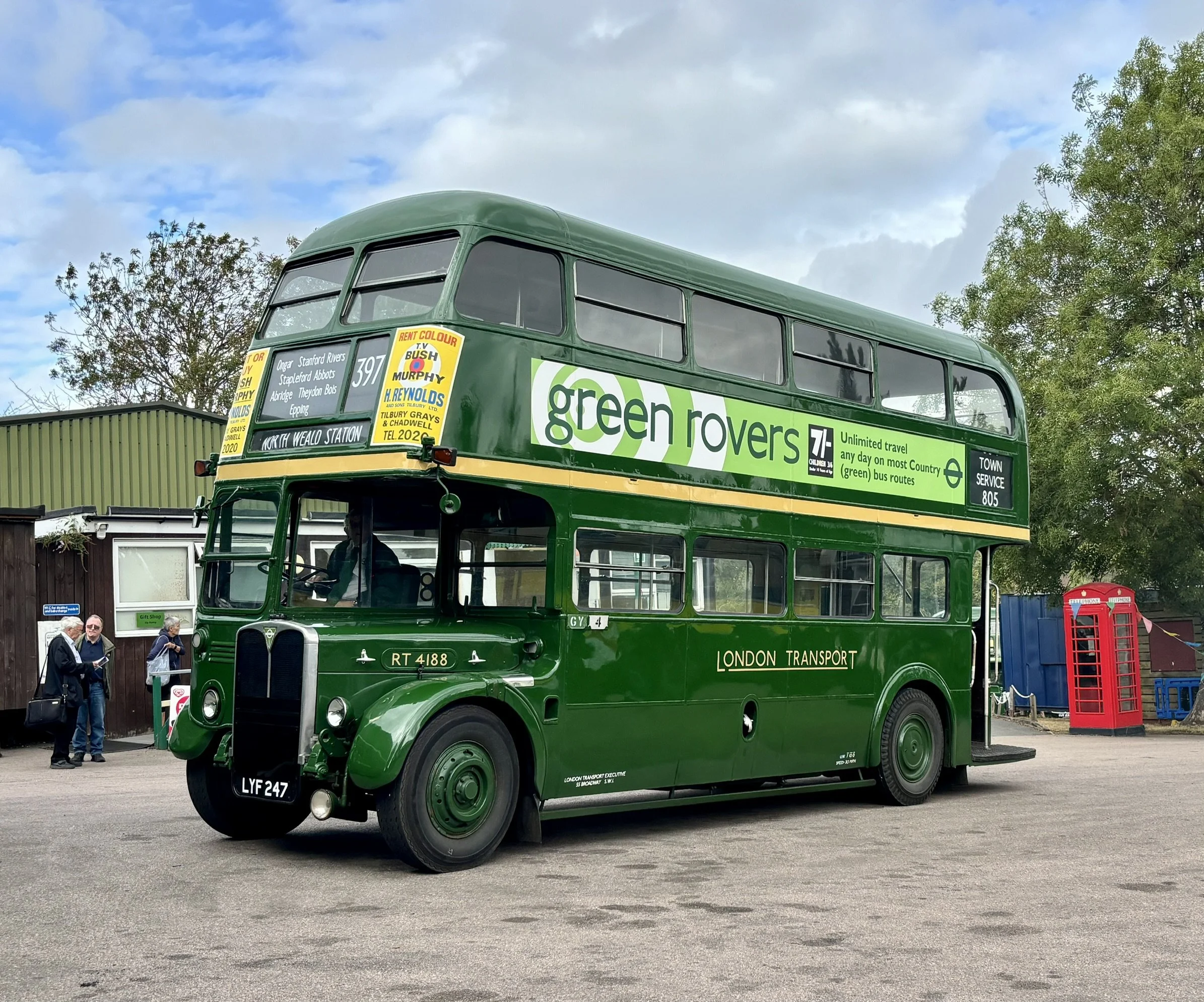
The second RT in service on the special Running Day routes was RT4188, which is seen arriving at North Weald Station before starting its day’s work on the 397. This was a clockwise circular from here via Passingford Bridge, Abridge and Epping.
Similarly to RT4190, this bus started green and was repainted red later in its London career. However, it spent over 30 years as a sightseeing bus in Canada before being repatriated by Roger Wright and restored.
Route 397: North Weald - Passingford Bridge - Epping - North Weald
I then switched to the clockwise double deck circuit operated by special service 397, with a second AEC Regent III ride on RT4188. This vehicle was one of those which operated with Abegweit Sightseeing Tours in Prince Edward Island, Canada, for over 30 years after London service and was brought back to the UK with several others by Roger Wright some years ago. Now fully restored to its original condition as a Green RT, the only indication of its former life in Canada is the speaker which was installed in the lower front bulkhead to give commentary during its touring work and which has been left in place.
This time, we swung right after leaving North Weald Station, making our way past “The Talbot” through the countryside to Ongar. After traversing the town, we entered open country once again for a fast run back to Passingford Bridge, where once again there was a 5 min scheduled pause for photos in tandem with the other RT on the 396 on the opposite side of the road. Then onwards to Abridge, back over the narrow bridge and up to Theydon Bois, which we thundered through without stopping. A bit of a climb up to the Wake Arms, before continuing right through the forest back into Epping and then on to complete the circuit to North Weald. About an hour’s ride in total aboard another nicely restored RT.
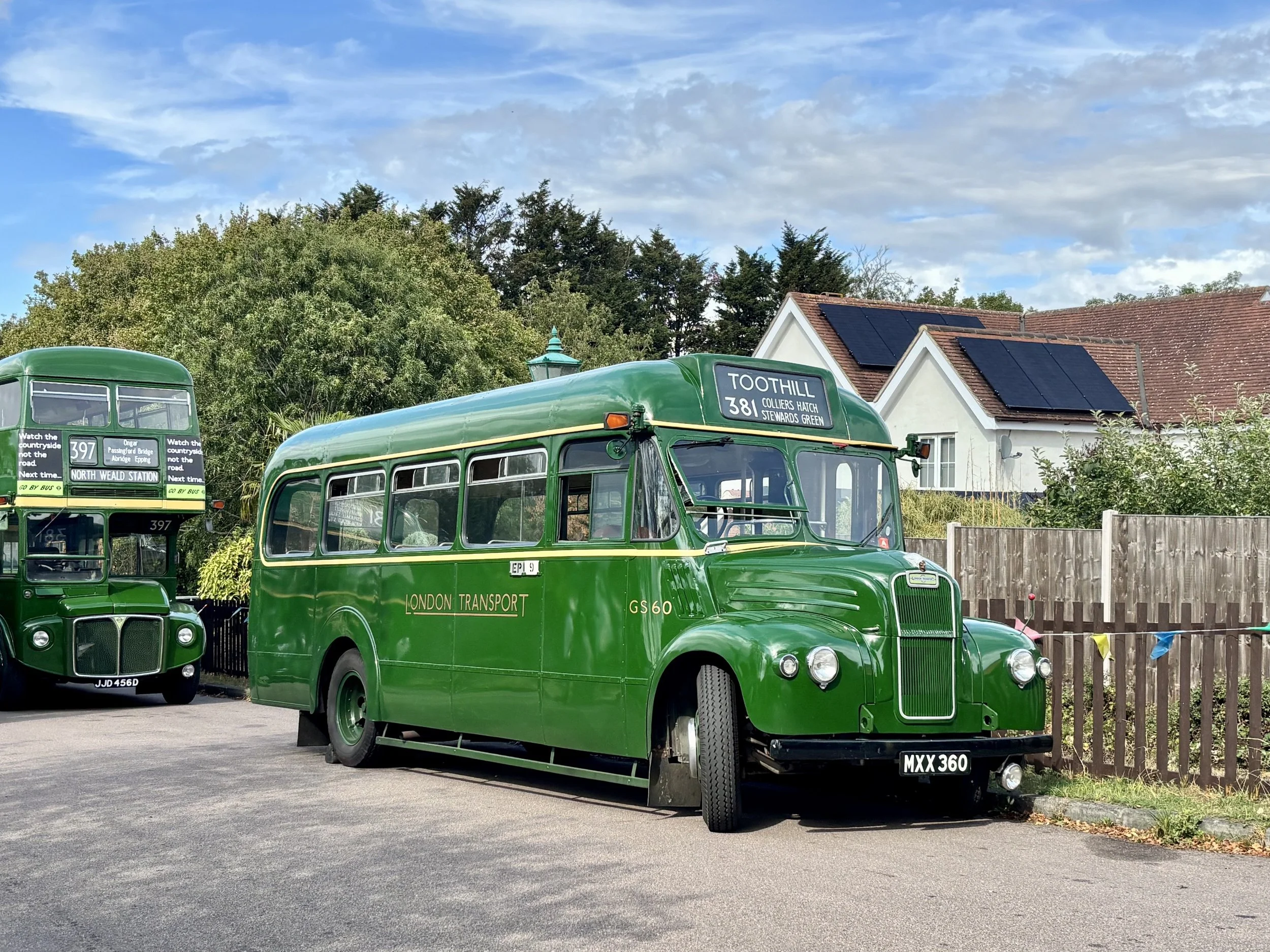
Another of the single deck routes on the Running Day was the 381 circular via Toothill & Coopersale. Whilst I travelled on an RF, Guy Special GS60 was also in service and is seen laying over at North Weald Station.
Both GS and RF types operated on the original London Transport / London Country 381, although that version continued to Epping and Harlow rather than North Weald.
Route 381: North Weald - Toothill - Coopersale - North Weald
I then switched to another of the single deck routes, the 381, boarding Green RF672, a typical Country Bus example of the class. We began by following the main road past “The Talbot” towards Ongar, but then turned off down Blake Hall Lane, the route becoming decidely more rural from this point. Soon, we passed Blake Hall Station, now a private residence but famously once the least used station on the London Underground network, being in the middle of nowhere on the Epping - Ongar section of the Central Line. EOR trains now pass through without stopping.
Passing through Greenstead Green, the journey became a bit of a pub crawl, as we called at various hostelries in the different little villages - the “Green Man” at Toothill, the “Dog House” at Tawney Common, the “Merry Fiddlers” at Fiddlers Hamlet, the “Theydon Oak” at Coopersale Street and the “Garnon Bushes” at Coopersale Common. Most of this section was genuine Route 381 territory, although the original LT / LCBS version continued on to Epping and Harlow, rather than to/from North Weald. Nevertheless, an interesting ride through some remote countryside.
At Coopersale Turn, we emerged onto the Epping - North Weald road and returned to our start point at North Weald Station, arriving after a 40 min round trip. The special service was operating about every 30 mins on the Running Day, featuring RF and GS class vehicles, both of which once ran on the original 381 at different times.
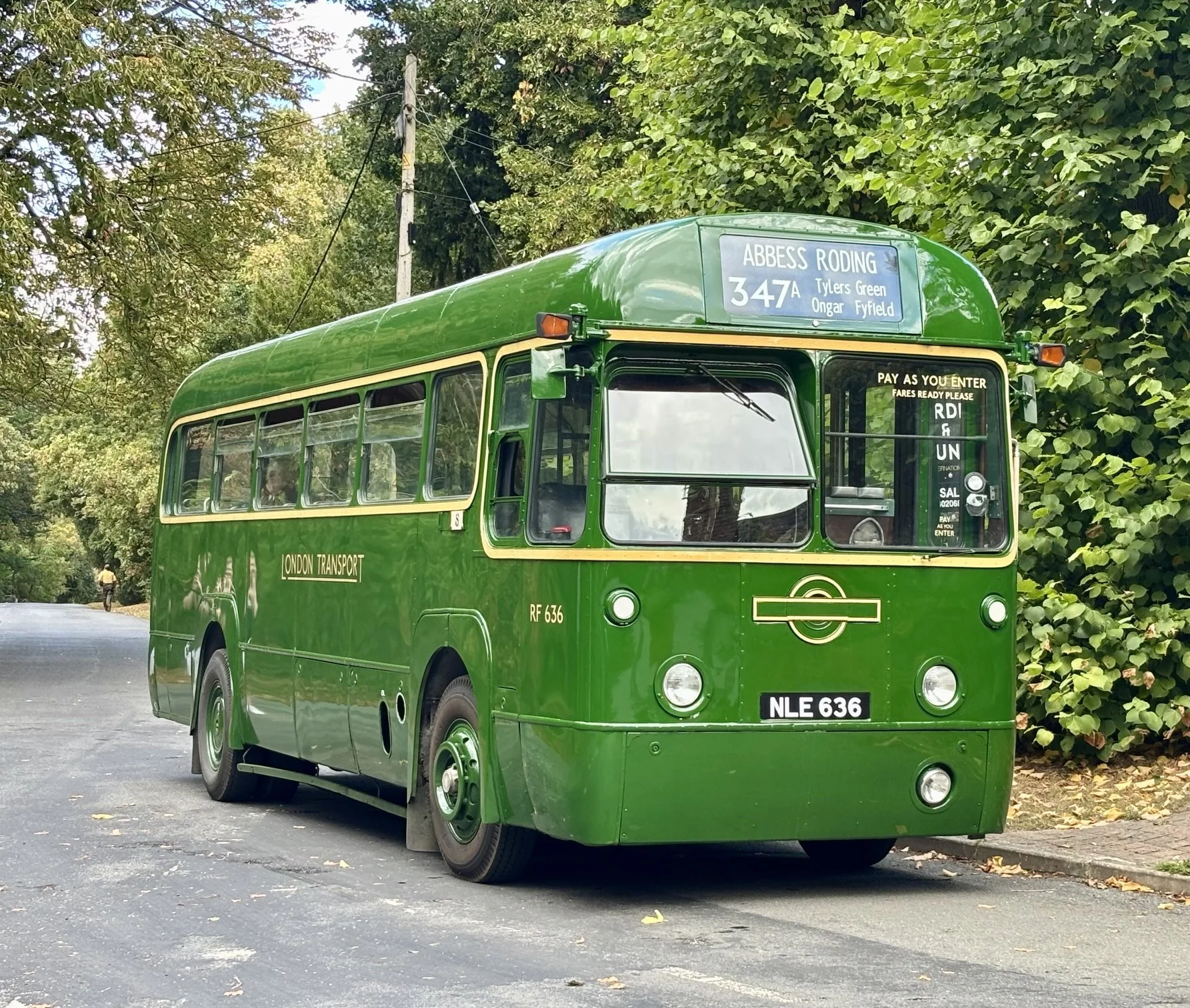
My final ride of the day was on the special 347A from North Weald to Abbess Roding (north of Ongar) aboard RF636, which is captured at the outer terminus. This was originally Eastern National territory and not served by London Transport or London Country.
This vehicle is preserved in London Transport Green RF colours and is one of the few that were converted experimentally to a wider cab, giving more room for the driver.
Route 347A: North Weald - Abbess Roding - North Weald
I was then left with just one of the special Running Day bus routes to do in order to complete the set. This was the 347A, another single deck service, which operated out to Abbess Roding, a village north of Ongar in what used to be Eastern National territory. The vehicle this time was RF636, a green example restored in London Transport Country Bus condition, but unusually one of the few of the class to be fitted with an experimental wider cab to allow more room for the driver.
A quieter trip than some of those earlier in the day, but we were soon bowling along back towards Ongar, following the 339 to the “Four Wantz” Roundabout (from the Old English for “Four Ways”), where we turned left for a fast run through the intermediate village of Fyfield before reaching the terminal loop around a narrow lane to Abbess Roding, with the timing point being at St Edmund’s Church. A very rural and somewhat remote terminus, which we reached after a 25 min run and had a 15 min break for photos and to await our scheduled return time.
Upon departure, we completed the loop back to the main road, turning right back through Fyfield to Ongar, and then back to North Weald via the reverse of our outward route. This particular journey then continued on to Epping, as did a number of other final trips on the other Running Day routes, in order to attend a photographic line-up at Tescos, site of the former bus garage. I stayed on the bus with several others for the extended run, alighting just beyond Epping Church after a 40 min trip. Several of the other buses, double and single deck, were present, but I made my way down the hill on foot to Epping Station to complete my day out.
Epping (EP) Garage was one of those opened by London Transport in 1934 and lasted until 1963, when it closed and was replaced by the new Harlow (HA) Garage. This made sense following the development of Harlow New Town in the 1950s/60s, as Epping increasingly operated Town Services in Harlow which were somewhat remote from the garage and so the opening of HA eliminated a fair amount of dead running. Route 339 was extended from Epping to Harlow at the same time, whilst the 396 to Bishops Stortford passed through Old Harlow. Green Line Routes 718 and 720 were diverted via the town centre.
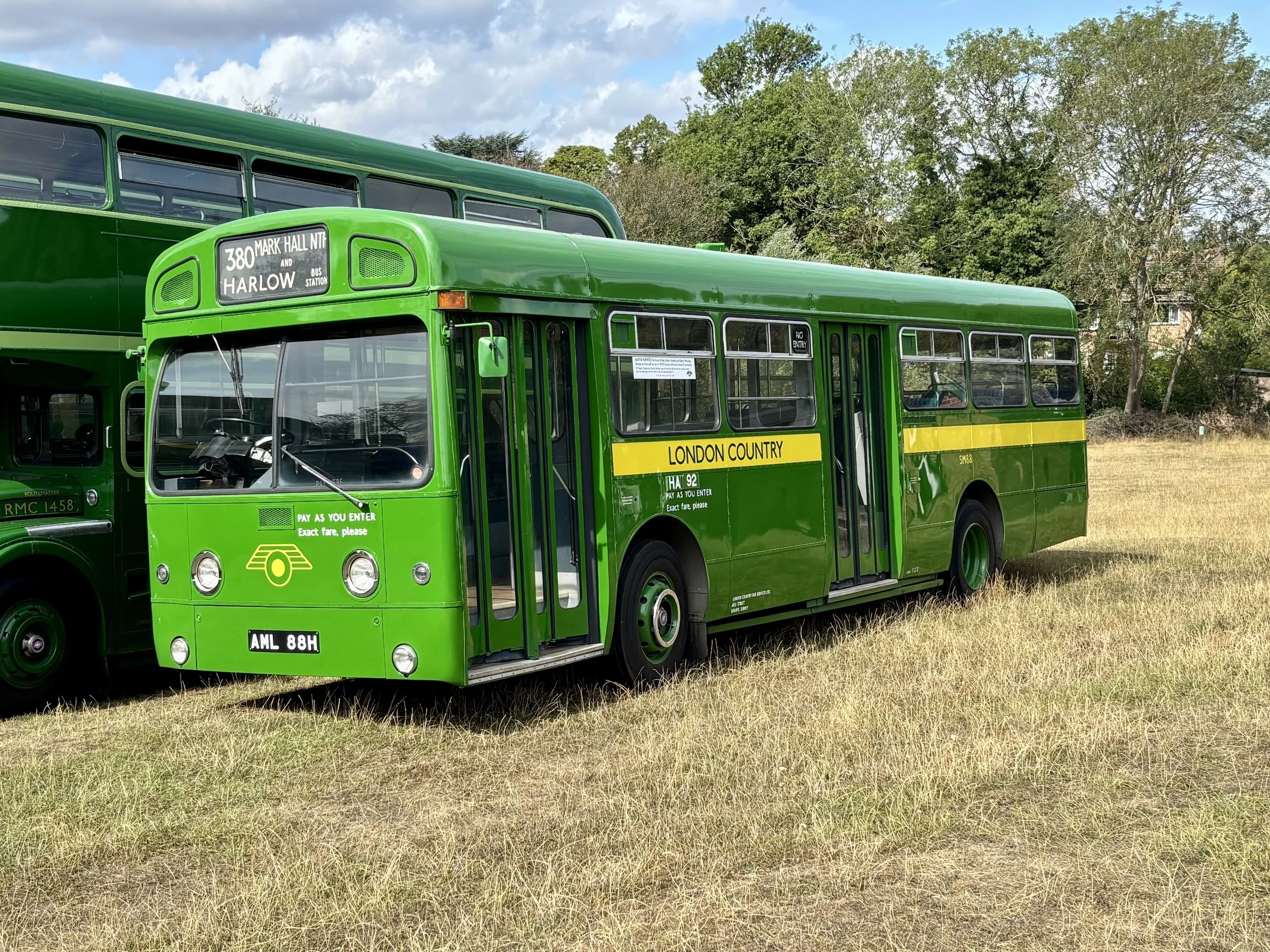
AEC Swift SM88 in London Country livery illustrates the class which operated in Harlow during the 1970s, mainly on the 812 Potter Street service, but also on other routes based at Harlow (HA) Garage, like the 380 which is depicted here.
This particular vehicle was originally red SMS88 but has been preserved in London Country condition as an SM. It gave short local rides during the Running Day.
Green Line
Whilst most of this article has concentrated on Country Buses, the event was also a celebration of Green Line Coaches. There was one special Green Line route in operation, the 720, between North Weald and Loughton Station, via Tylers Green, Thornwood, Epping and Epping Forest, running at Hourly intervals during the day and featuring ex-Green Line vehicles. This neatly covered part of the original 720, which ran between Bishops Stortford and Aldgate via Epping and Loughton. Unfortunately, time prevented me from taking a ride on this route.
The following selection of photos shows some of the Green Line vehicles on display and in service during the day.
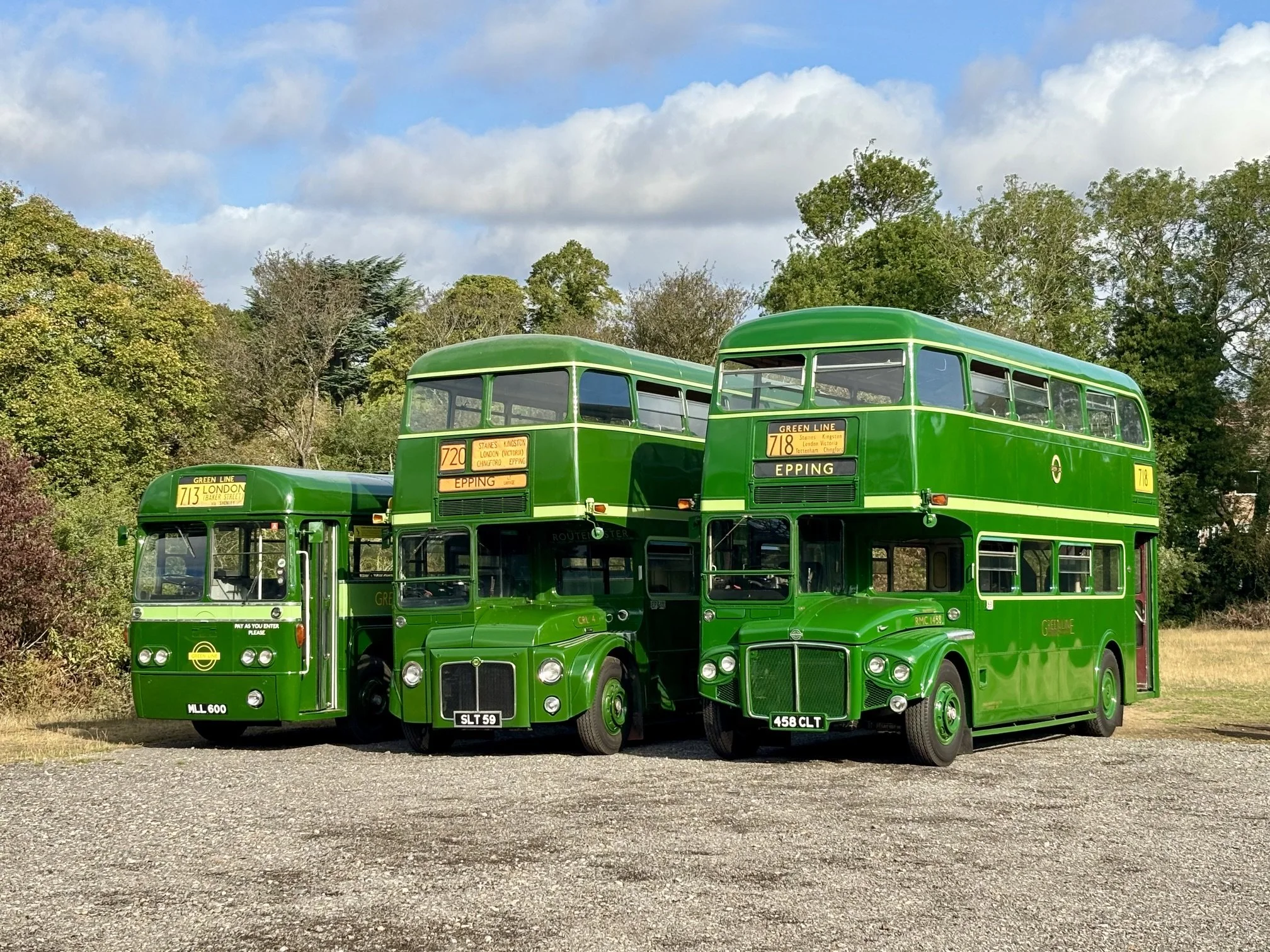
This Green Line trio at North Weald features RF613 blinded for the 713 (Dorking to Dunstable), whilst the two RMCs represent more local routes 720 (Bishops Stortford - Aldgate) and 718 (Harlow - Windsor), both of which passed through nearby Epping.
Note the front end detail differences between prototype RMC4 in the centre and production batch RMC1458 on the right.
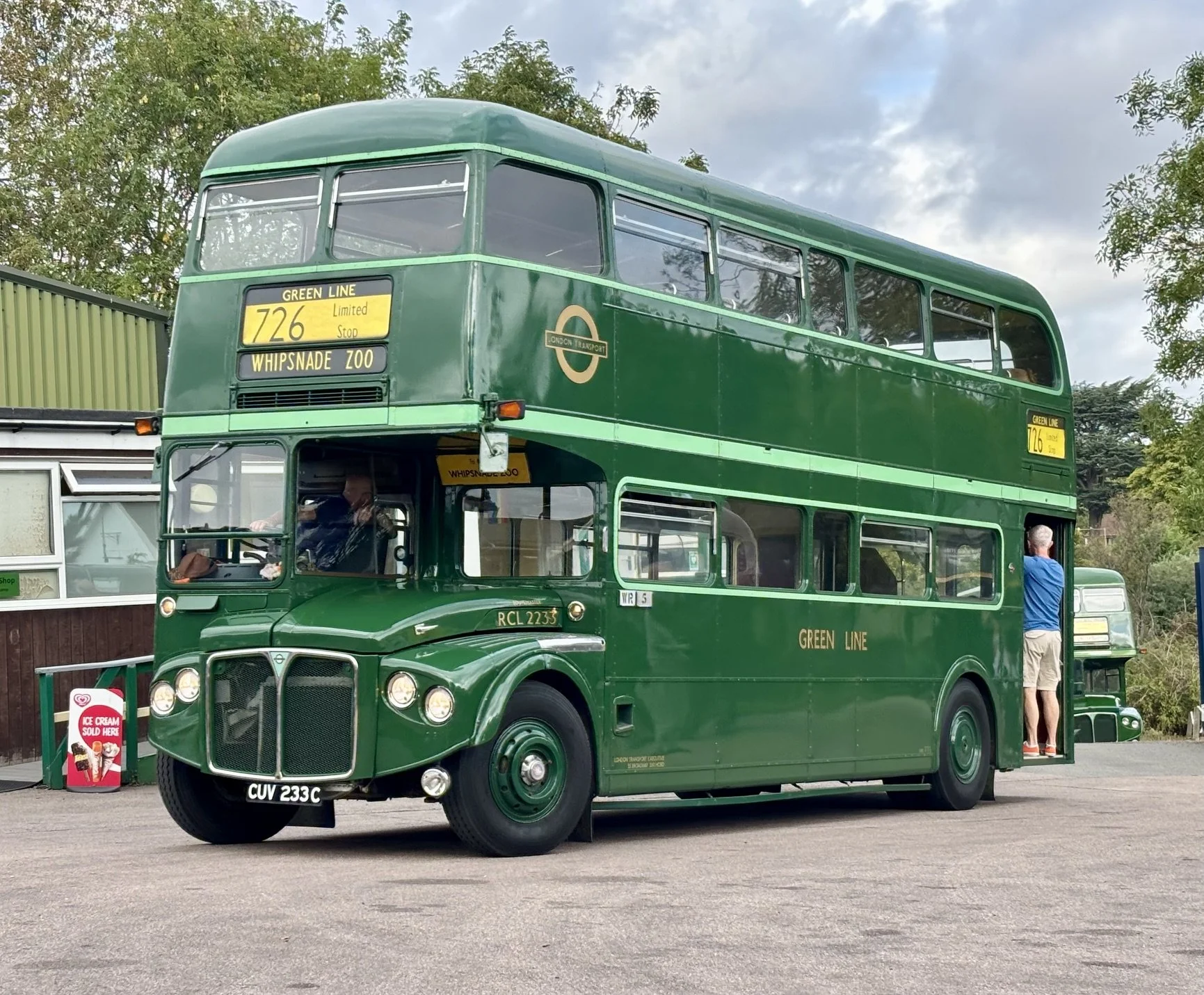
RCL2233 is one of the longer Green Line Coaches with the additional central seating bay and is seen arriving at North Weald Station.
The bus is blinded for the 726, which was a Summer Only service between Baker Street and Whipsnade Zoo, operated by Romford London Road (RE) Garage.
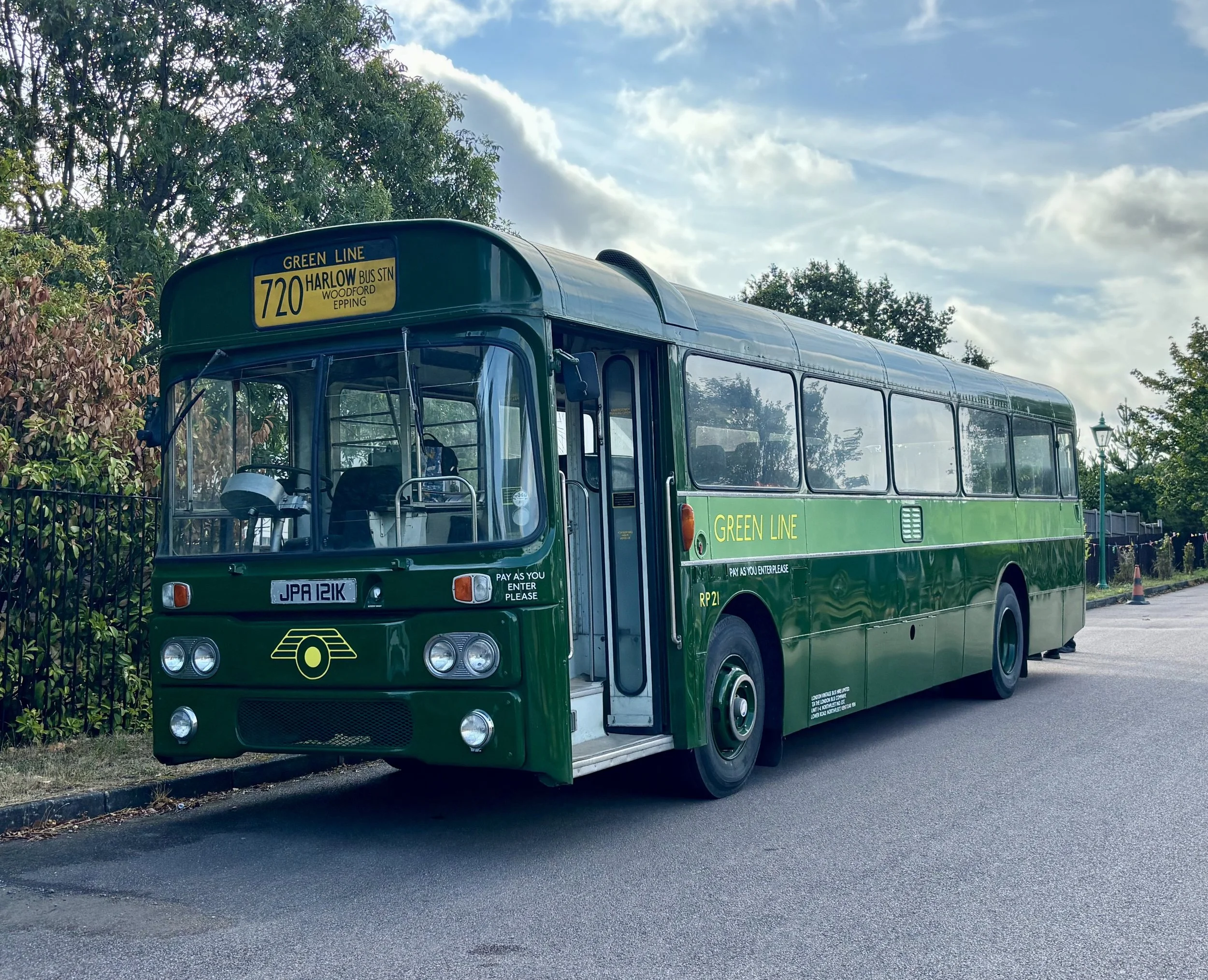
RP21 is a preserved AEC Reliance coach delivered in 1971 to London Country for Green Line operations. It is blinded for the 720 which was operated by the type from nearby Harlow (HA) Garage.
This vehicle is now owned by the London Bus Company and is in original livery, some examples ending up in National leaf green.
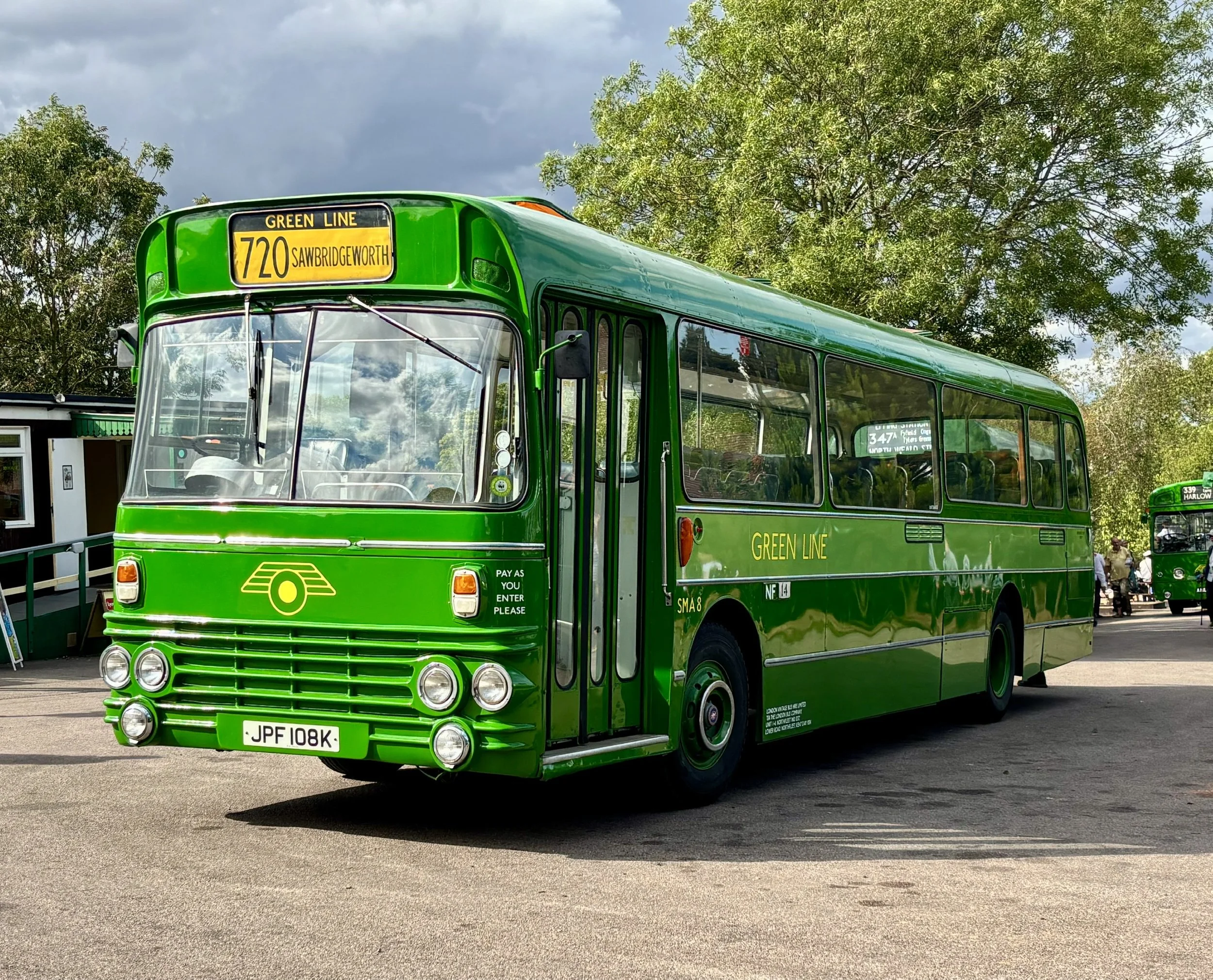
The London Bus Company also owns this rare bus in preservation, SMA8, a London Country 1972 AEC Swift with Alexander body.
Although blinded for a short working 720, the class was mainly associated with the long orbital 725 route between Windsor & Gravesend.
In summary, this was a well-organised event, with a good selection of ex Country Buses and Green Line Coaches to view and to ride. Thanks must go to the EOR, the London Bus Company, plus the volunteer crews and officials who made the day a success.
Watton
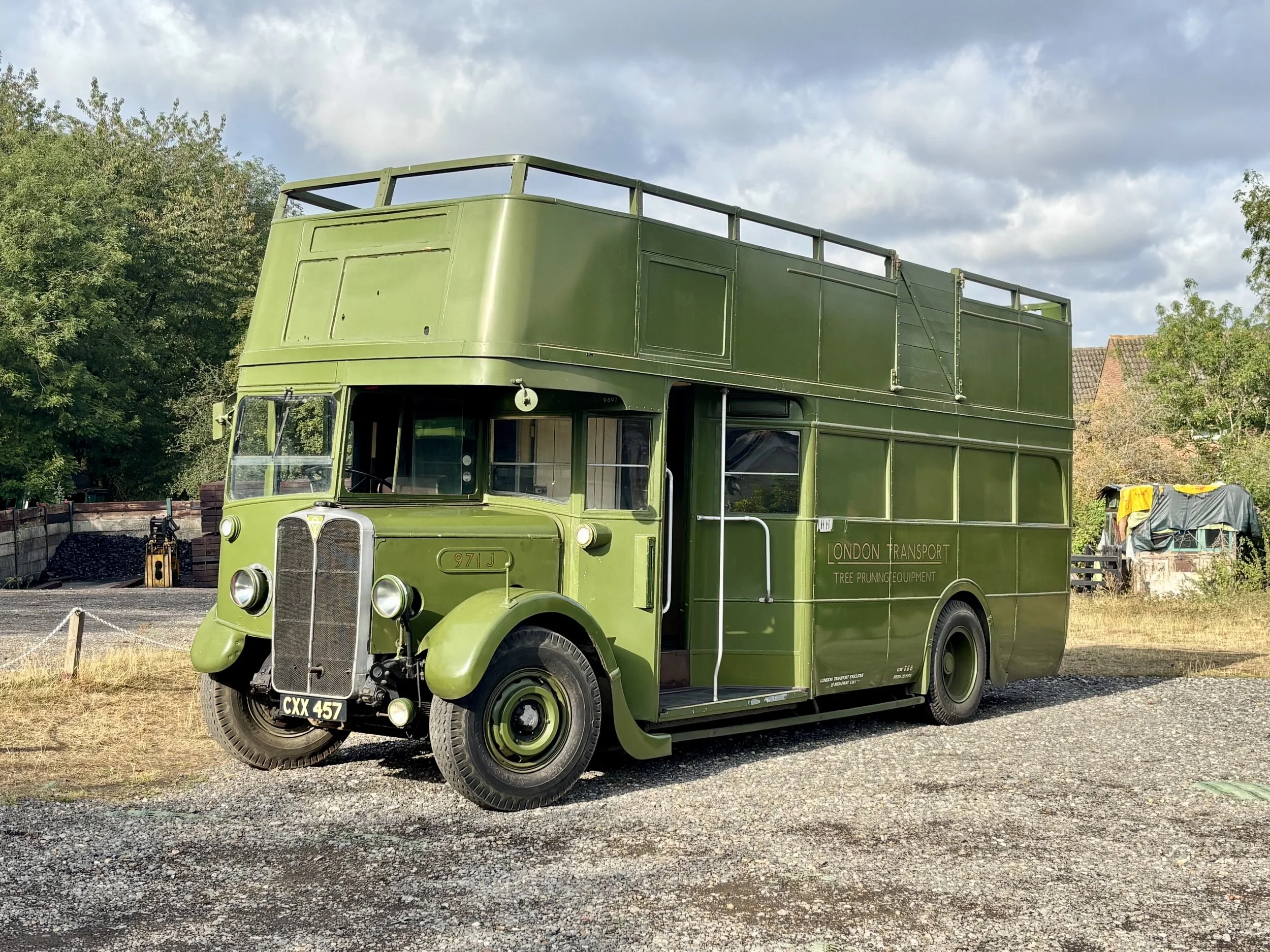
An unusual vehicle on display at North Weald was this former London Transport and London Country tree-lopper, converted from former STL1470.
This was one of the batch of forward entrance STLs with London Transport Country Buses, which dates from 1936 and was the oldest vehicle present at the event.
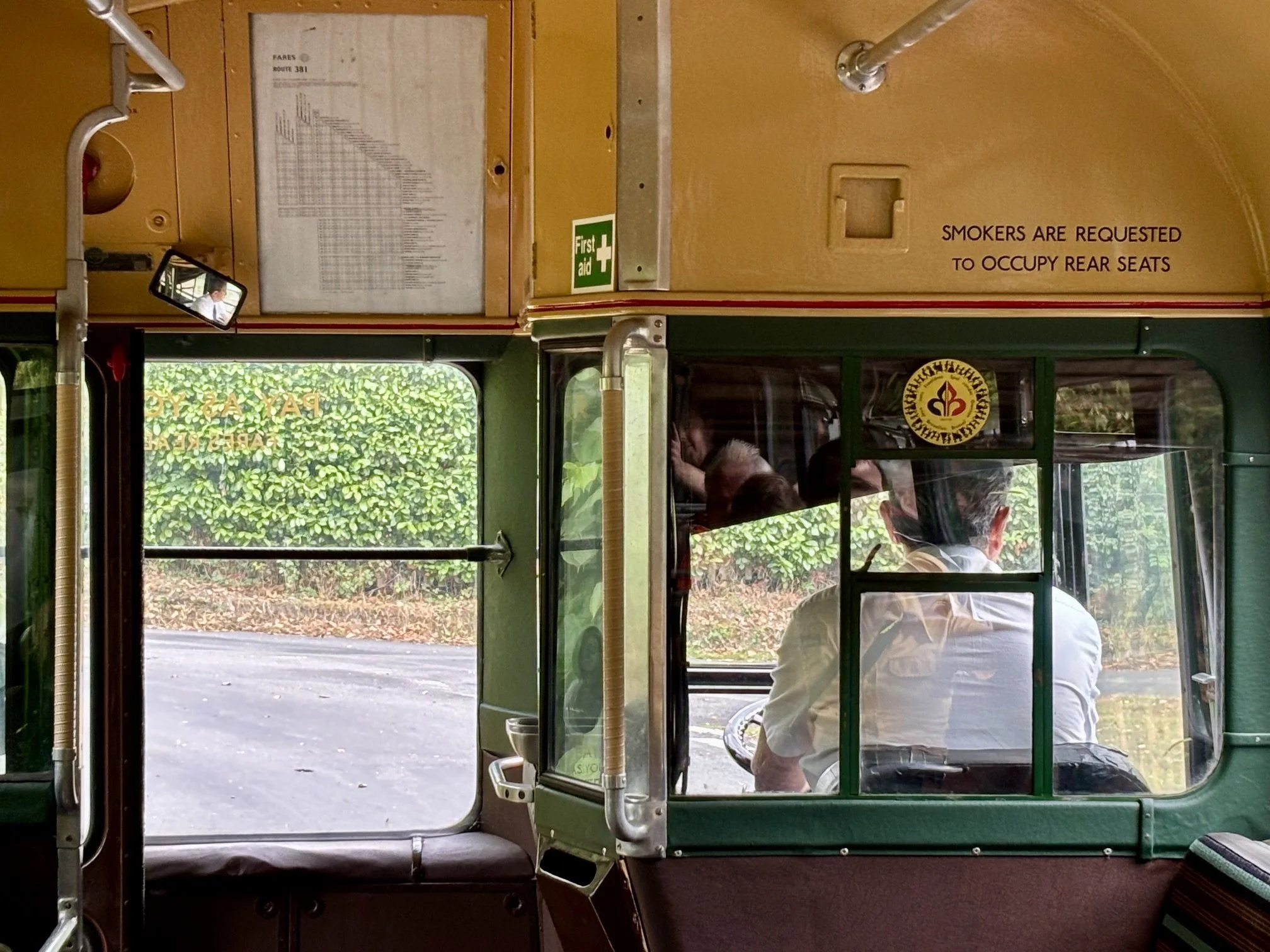
We end this review with an interior shot of RF636 showing the modified “wide cab”, which only a very few of the class received. The sliding window behind the driver’s seat was used by the instructor when the bus was acting as a trainer.
The “Smokers are requested to occupy rear seats” notice is a reminder of past times!
