
Heritage Railways: Watercress Line
In a previous visit last year, I attended the Alton Bus Rally in Hampshire. Now, I return to the town and ride the Mid Hants Railway (known as the Watercress Line) over the “Hampshire Alps” to Alresford and back, featuring steam haulage.
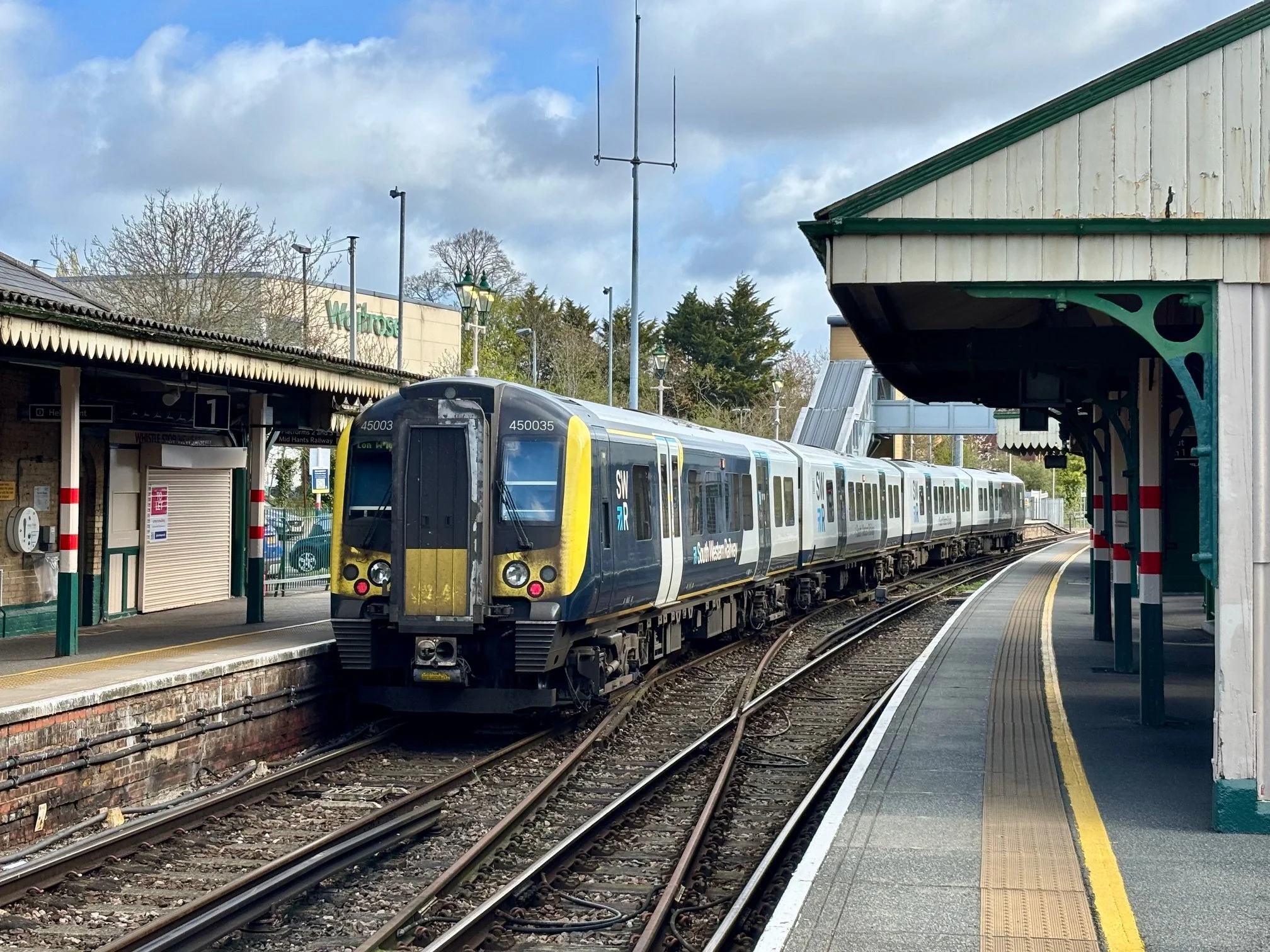
The Watercress Line has a connection with the main line network at Alton. South Western Railway “Desiro” EMU 450 035 stands in Platform 1 having just arrived with a service from London Waterloo.
Platforms 1 & 2 are for National Rail services, whilst Platform 3 (out of sight on the right) is used by Watercress Line trains.
Overview of the Line
The Mid Hants Railway is a heritage line running 10 miles between Alton and Alresford in Hampshire. Its popular name “The Watercress Line” comes from the days when it was used to transport locally grown watercress to markets in London.
It connects with the national rail network at Alton, where regular services operated by South Western Railway run to and from London Waterloo. The other end of the line is at Alresford, with two intermediate stations at Medstead & Four Marks and Ropley.
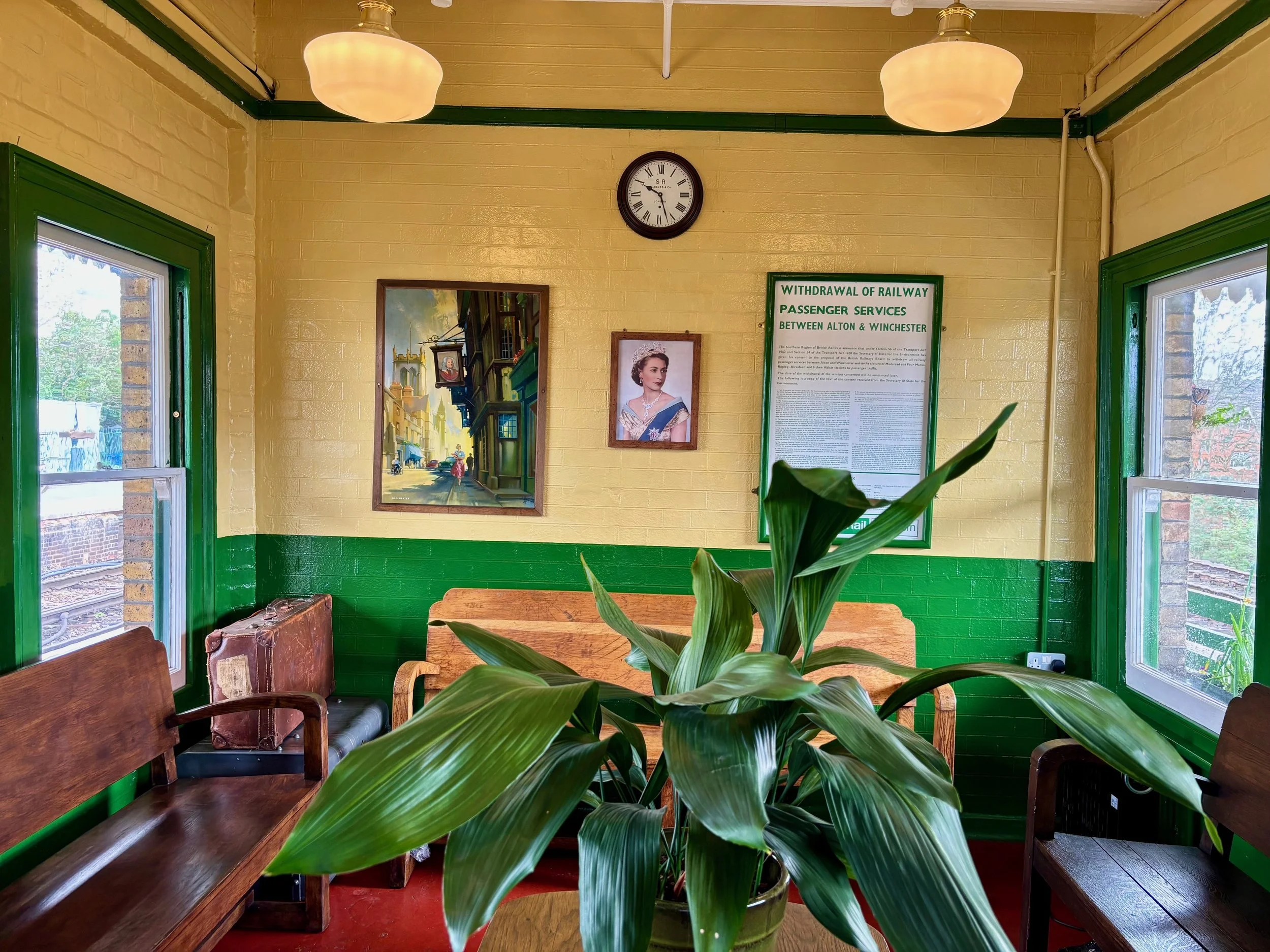
The nicely restored Watercress Line Waiting Room at Alton Station in traditional BR Southern Region style.
Note the poster on the wall announcing the withdrawal of passenger services between Alton & Winchester, which took place in 1973.
History of the Line
The Mid Hants Railway was built by the Alton, Alresford & Winchester Railway Company, opening between Alton and Winchester in 1865. Trains were operated by the London & South Western Railway, which purchased the line in 1884. Intermediate stations were eventually provided at Medstead & Four Marks, Ropley, Alresford and Itchen Abbas.
The line provided an alternative route to the main line between London Waterloo and Southampton and was used both for transporting locally grown watercress and for military traffic between Aldershot and Southampton. Electrification of the line from London to Alton in 1937 meant that the Mid Hants was no longer part of a through route and it became necessary to change trains at Alton. The line became part of the Southern Railway in 1923 and part of the Southern Region of British Railways in 1948. It initially survived the Beeching axe in 1963, but was closed by British Rail in 1973. During its final years under BR, passenger services were operated by Class 205 (“2H”) diesel-electric multiple units.
The Winchester & Alton Railway was formed in 1975 to purchase the line as a heritage operation, raising funds through share issue. Reconstruction and reopening of the line progressed in stages - Alresford to Ropley in 1977, extended to Medstead in 1983 and then to Alton in 1985. Facilities and structures at stations have gradually been added over the years to give the feel of an operational steam railway, with enhanced engineering sheds added at Ropley in 2012 partly funded by lottery grants.
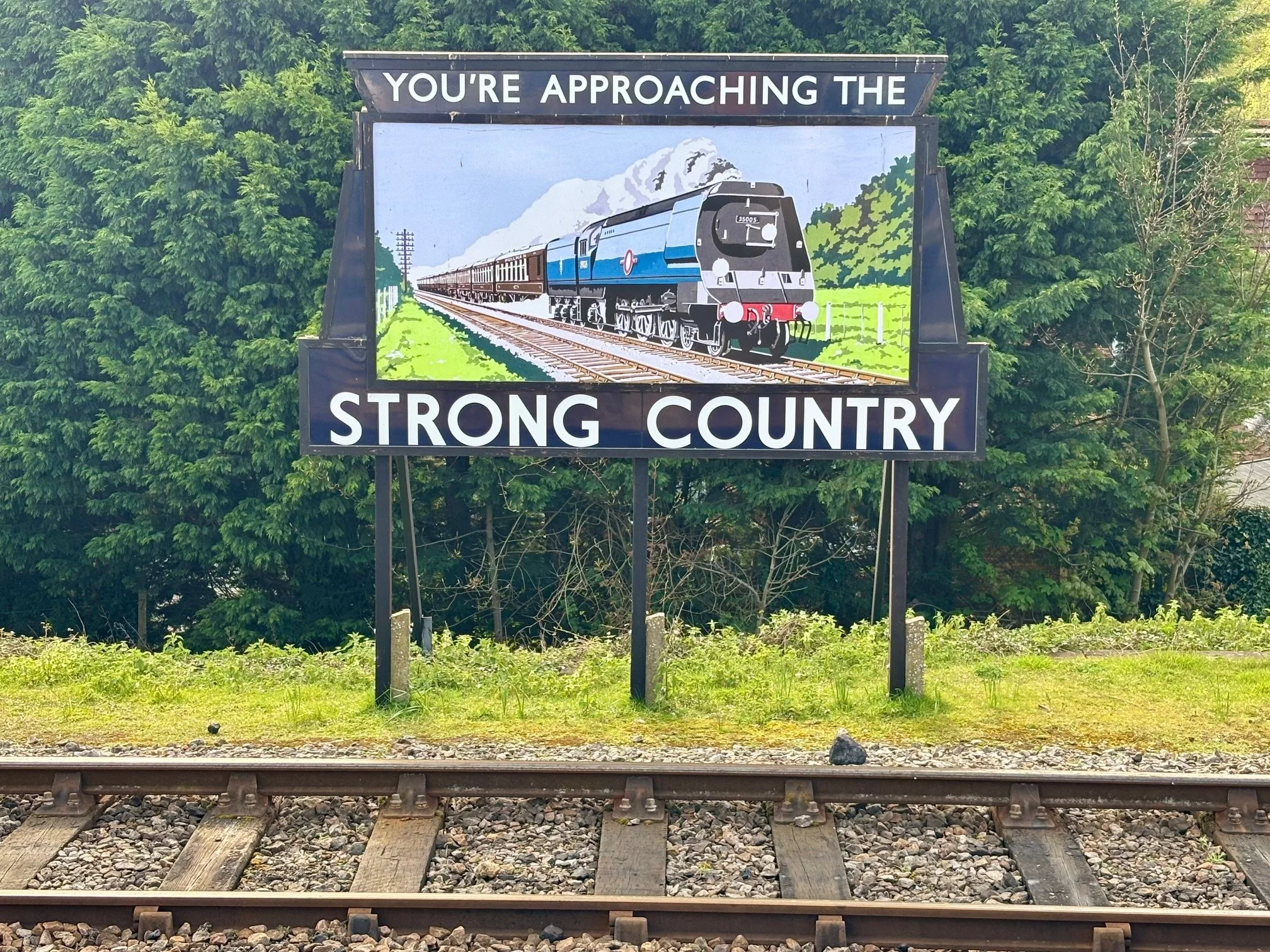
Boards like this saying “You’re approaching the Strong Country” or “You’re in the Strong Country” were common beside the main line from London Waterloo to Hampshire & Dorset in the 1950s & 60s. This replica is beside Platform 3 at Alton.
These were adverts for Strong’s Brewery in Romsey and featured hand-painted illustrations of Bullied Pacifics. They disappeared after Strongs were taken over by Whitbread in 1969.
Locomotives & Rolling Stock
The Mid Hants Railway has a large collection of steam and diesel locos, carriages and wagons:
Steam Locos - including Bulleid Pacifics of Merchant Navy & West Country class, SR Lord Nelson class, Schools Class, Urie S15, BR Standard Class 4 & 9F, LMS Ivatt Tank and a Black 5.
Diesel Locos - including representatives of Class 33, 47 & 50 plus Class 03, 08 & 11 shunters.
Multiple Units - Class 205 “Hampshire” unit plus a Class 150 “Sprinter”.
Carriages - mainly consists of BR Mark 1 stock but with some older Southern Railway origin coaches.
Other Vehicles - comprise a wide variety of wagons, vans, cranes and plant.
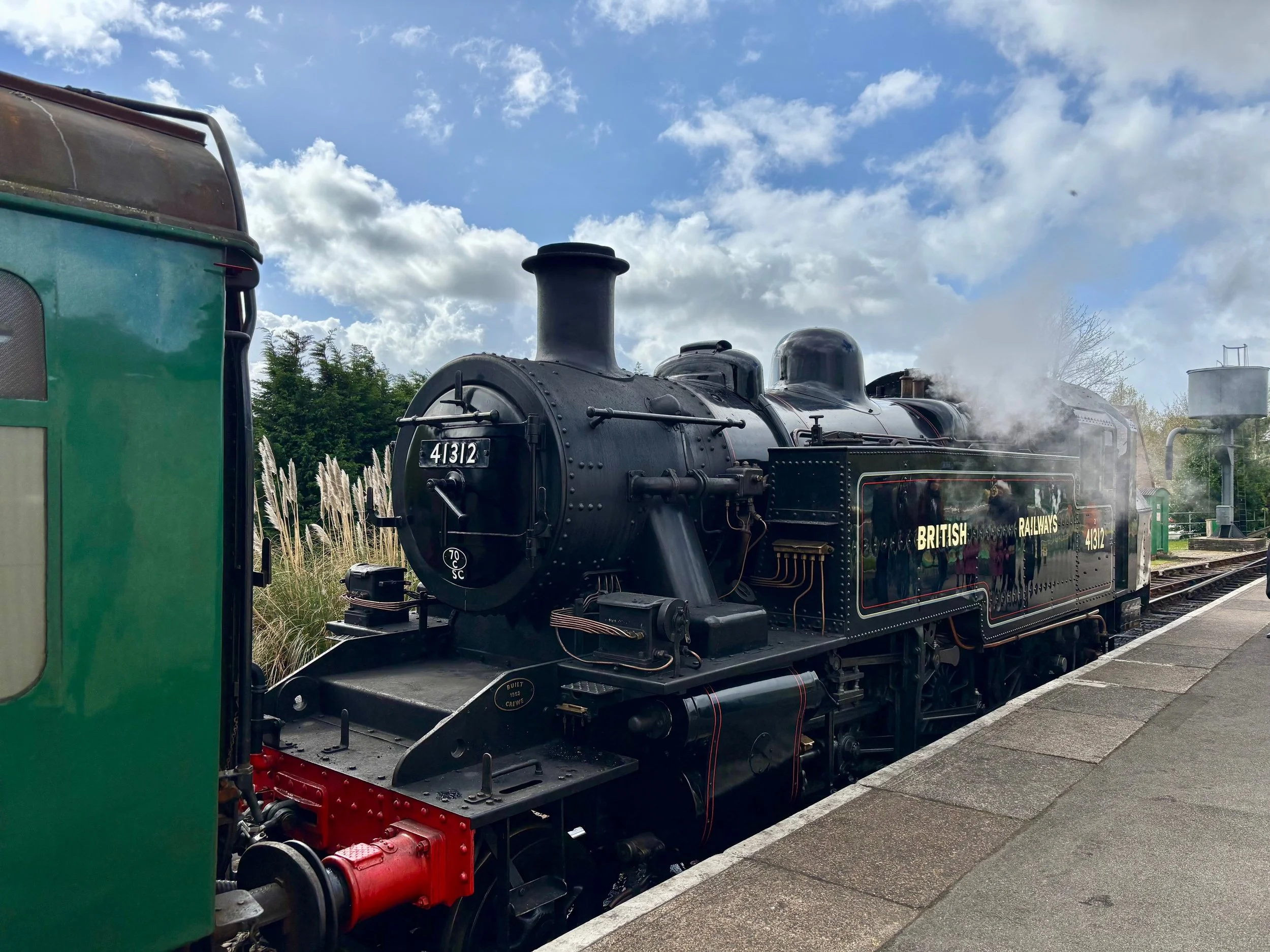
LMS Ivatt Class 2MT 41312 was built in 1952 at Crewe Works and spent its entire working career on the Southern Region. It is seen at the head of the 10.50 departure from Alton to Alresford on which I rode behind it.
Withdrawn in 1967, it was rescued from Woodhams Scrapyard in Barry and restored in the 1990s for use on the Mid Hants line.
Ride 1: Alton - Alresford
I joined the first down train of the day, the 10.50 departure from Alton, taking my seat in the BR Mark I open carriage at the front of the train, which was hauled by Ivatt Class 2MT 41312 of 1952, which had previously worked on the Southern Region prior to withdrawal from normal service and its susbequent restoration.
Bang on time, with a blowing of whistles, we were off and left the station area, passing the signalbox and onto the single track line, passing on our left KIng’s Pond, which was created by separating a stretch of water from the River Wey and a haven for the local duck population. The first part of the line is through the town, with back gardens on both sides, but soon we were into open country and climbing the 1 in 60 gradient to the summit of the line at Boyneswood Bridge. This section was once known as “Going over the Alps” and is a mix of embankment and cuttings.
First stop was at Medstead & Four Marks, a two platform small country station with passing loop, nicely restored with small buildings, signalbox and Southern Railway features in 1940s condition. There are exhibitions here on the role of railways in the transportation of goods and freight, plus a display of photos illustrating the history of the station since its opening in 1868. This station is the highest on the line and said to be the highest in Southern England at around 650 feet. Some workings pass here, but we were not scheduled to do so on this trip and were on our way again within a couple of minutes. The section onwards from here is more open and there was the sense of riding down from the top of the Alps, with countryside stretching all around us.
Approaching Ropley, which is the operational headquarters of the line, we passed a long line of diesel and steam locos plus carriages and wagons in various states of repair in the sidings. Maintenance work was on-going in the yard outside the sheds on certain items of rolling stock. Pulling into Ropley Station, we passed the other train in operation that day which was at the other platform, headed by Merchant Navy Class 35005 “Canadian Pacific”. Ropley Station retains its original station house and has a fine display of topiary, which was a traditional feature here. The signalbox is one end adjacent to the loco shed, which includes a viewing gallery to enable visitors to see engines from above and the restoration work being carried out.
With a clear road ahead, we were back onto the final single track section through more countryside to the terminus at Alresford, which was the largest intermediate station on the Mid Hants between Alton and Winchester. We pulled into Platform 2 after a decent 35 min run.
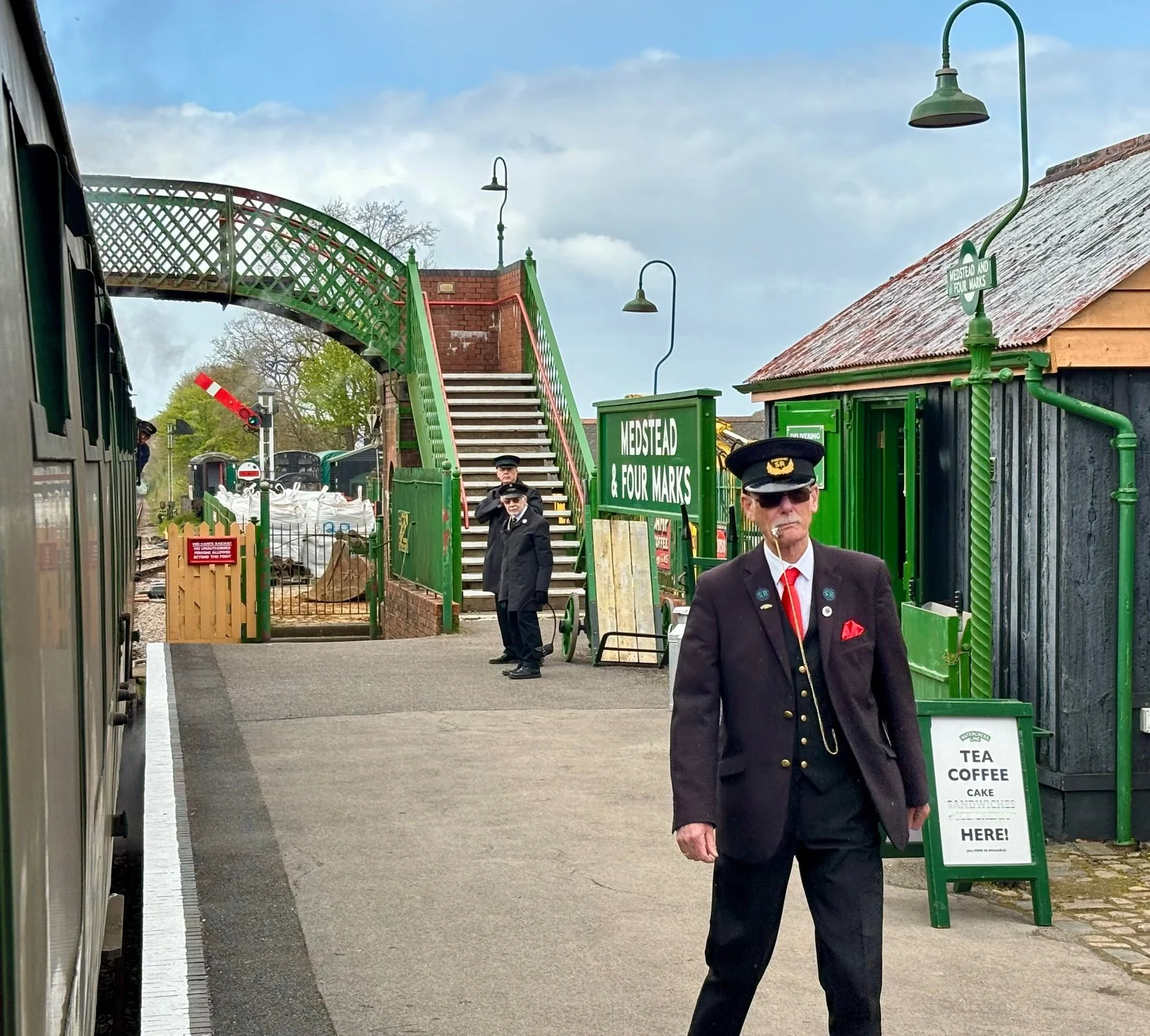
Medstead & Four Marks Station is the first stop after Alton and like others on the line has been restored in Southern style. The guard blows his whistle before giving the “Right Away” to the driver.
This is at the top of the climb from Alton and reputedly the highest station in Southern England at around 650 feet above sea level.
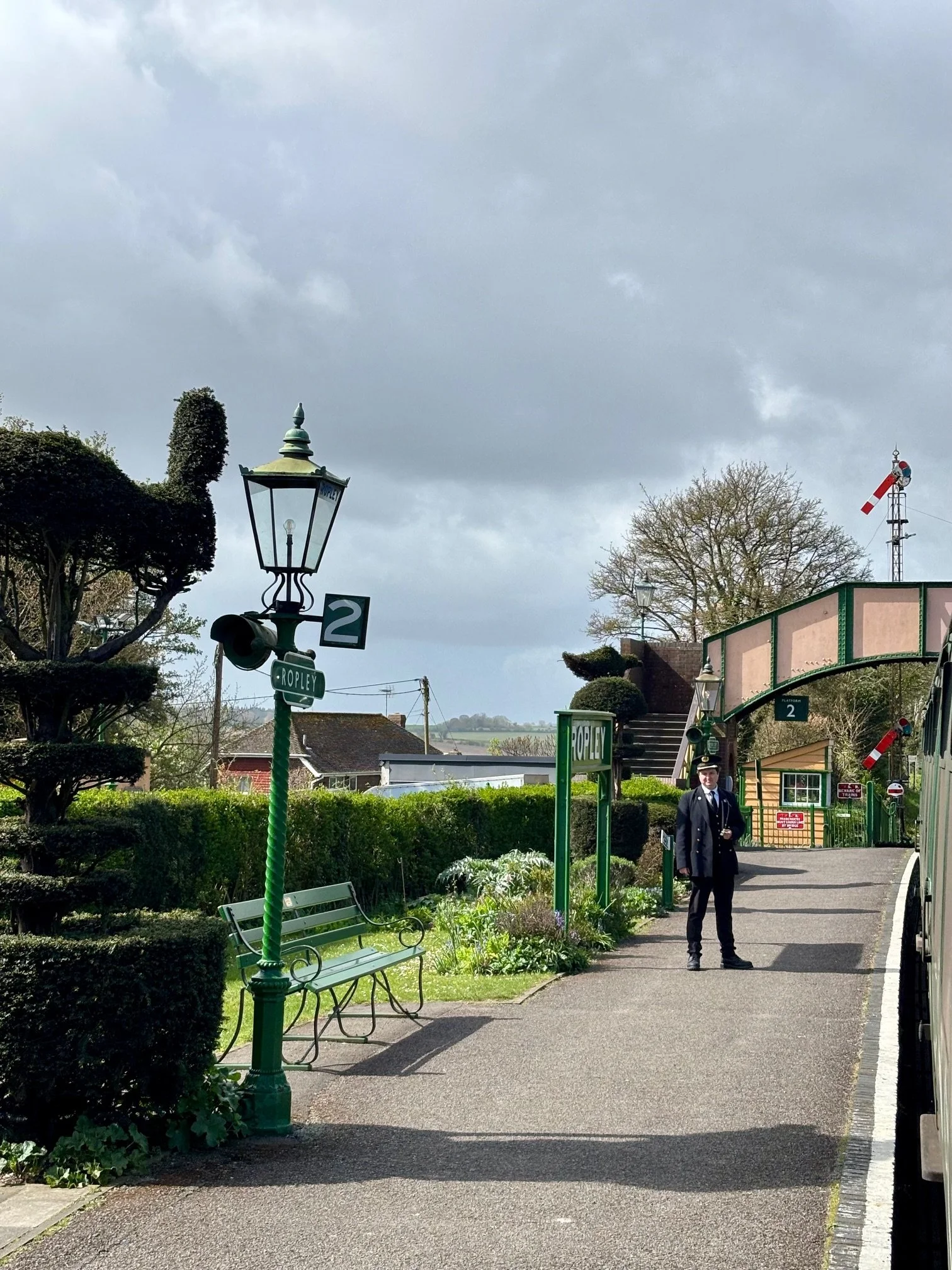
Ropley Station is where the headquarters of the line and the loco sheds are located.
Some interesting topiary is in evidence on the platform beside the Southern lamppost, bench seat and signage. The porter awaits departure time.
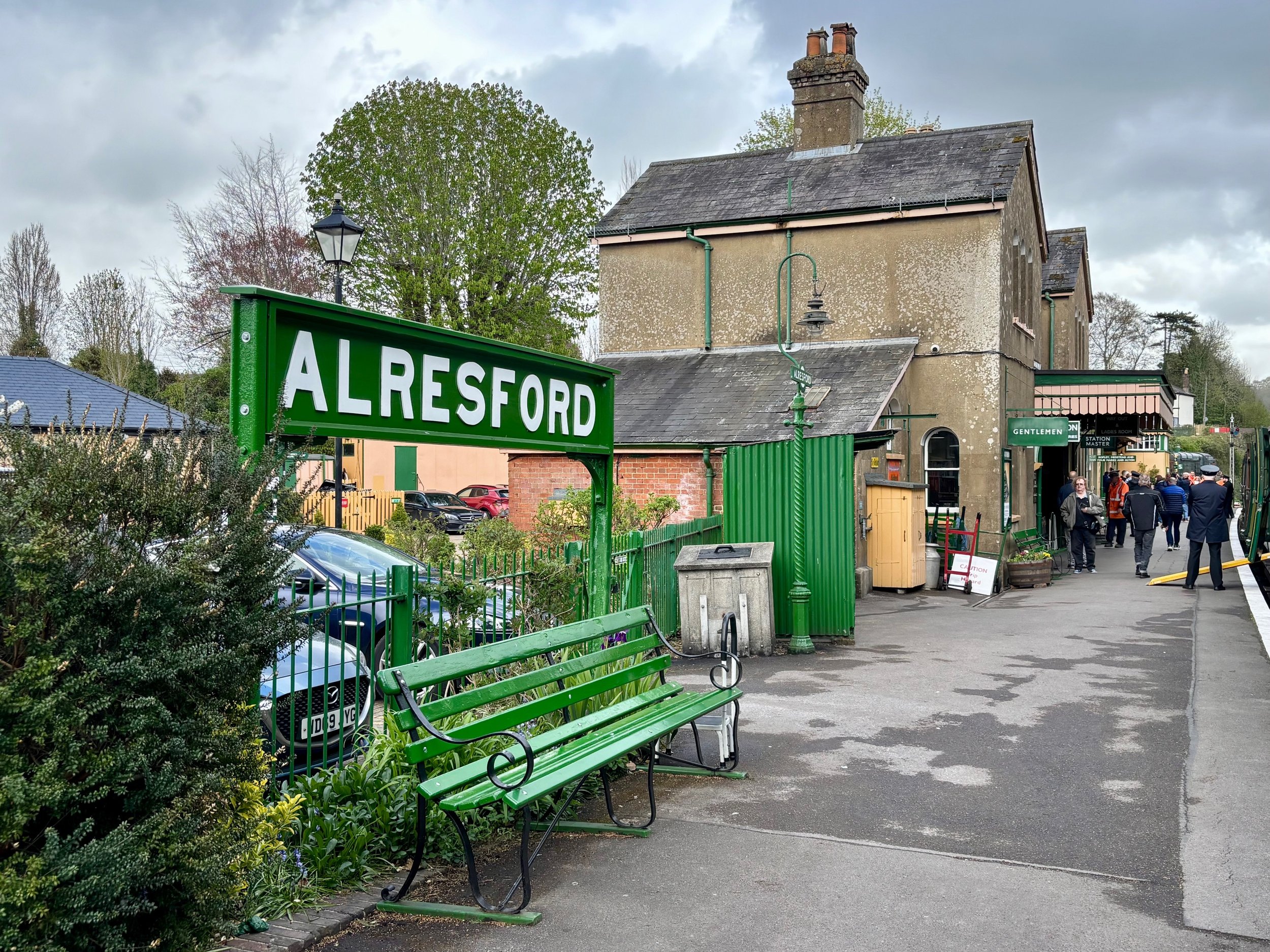
Alresford Station is the western terminus of the line and has two platforms although only this one is in regular use.
The station building features booking office, gift shop, cafe, toilets and staff facilities.
Ride 2: Alresford - Alton
During the break at Alresford, 41312 ran around the train and attached to the other end. The station itself has various facilities including booking office, gift shop, cafe, toilets and staff rooms. Another nicely restored signalbox sits at the end of Platform 1, behind which is the former goods platform from where the watercress that gave the line its name was sent to London and other parts of the country. The adjacent town has a preserved Georgian High Street, which is worth a stroll, together with the Millennium Trail along the River Alre.
Sharp at 11.45, we left on the return run, although this time I travelled in one of the former Southern Railway carriages, with a different clientele for company. On this trip, we passed the second train at Medstead & Four Marks, with the guard helpfully telling us we had a few minutes to stretch our legs on the platform before continuing to Alton. Arrival back at my start point was at 12.30 and time to take a look at the restored part of the station during the lunch break.
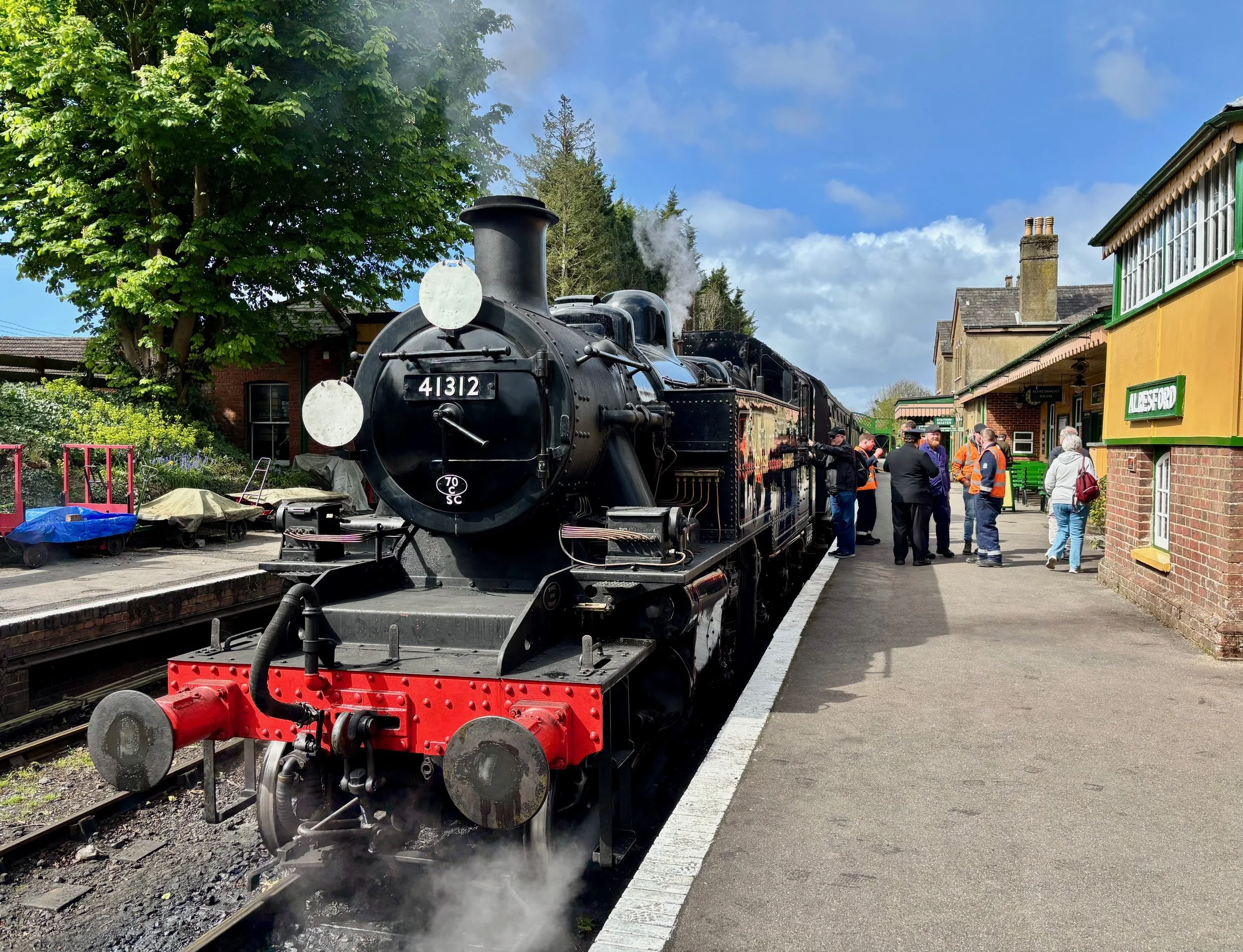
Loco 41312 again, being prepped for its return run from Alresford to Alton, after backing on to its train comprising a set of green Southern Railway & BR Southern Region Mark I coaches.
The signal box can be seen on the right.
Ride 3: Alton - Alresford
My afternoon run was basically a repeat of the morning one, but this time on the 14.00 from Alton in another Mark 1 carriage hauled by the larger Merchant Navy Class loco 35005 “Canadian Pacific”. This had a headboard for “The Royal Wessex”, recalling the prestige train that used to work from London Waterloo along the LSWR main line to Southampton, Bournemouth, Weymouth & Swanage. The use of a bigger engine meant that we had more coaches on this working, which included some 1st Class dining cars (at a premium fare!).
This time we passed the up train at Medstead & Four Marks and had a generally busier run than the one in the morning. Whilst the weather had been kind up to this point, it became showery during this trip and arrival at Alresford coincided with a particularly heavy hail storm, which nevertheless provided some good photo opportunities. However, this was soon over and sunny conditions returned.
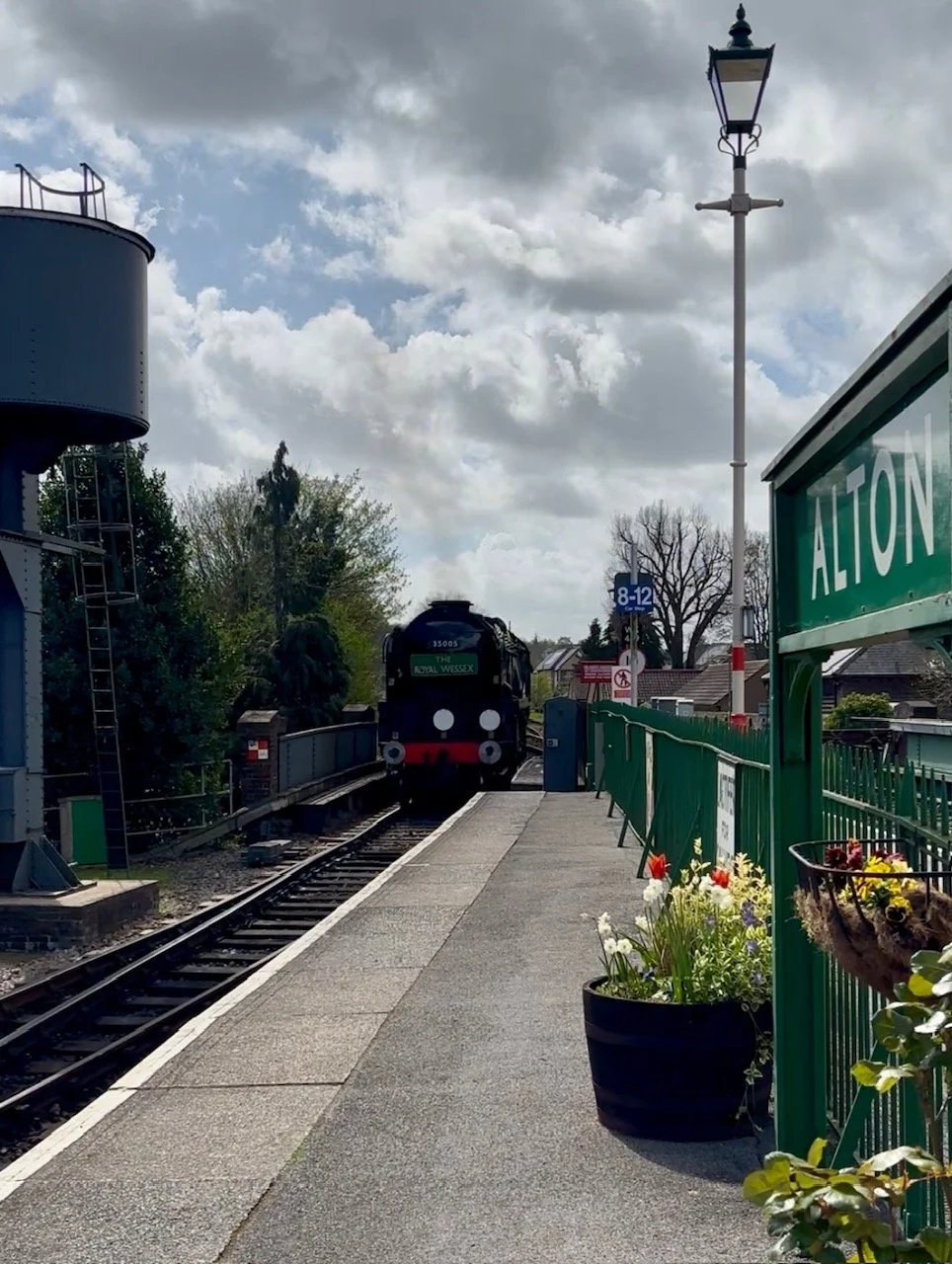
The other steam loco on duty the day I visited the line was SR Merchant Navy Class No 35005 “Canadian Pacific”. Seen here arriving into Alton Station with a service from Alresford.
One of a class designed by Oliver Bulleid, this loco entered service in 1941, was rebuilt in 1959 and withdrawn in 1965.
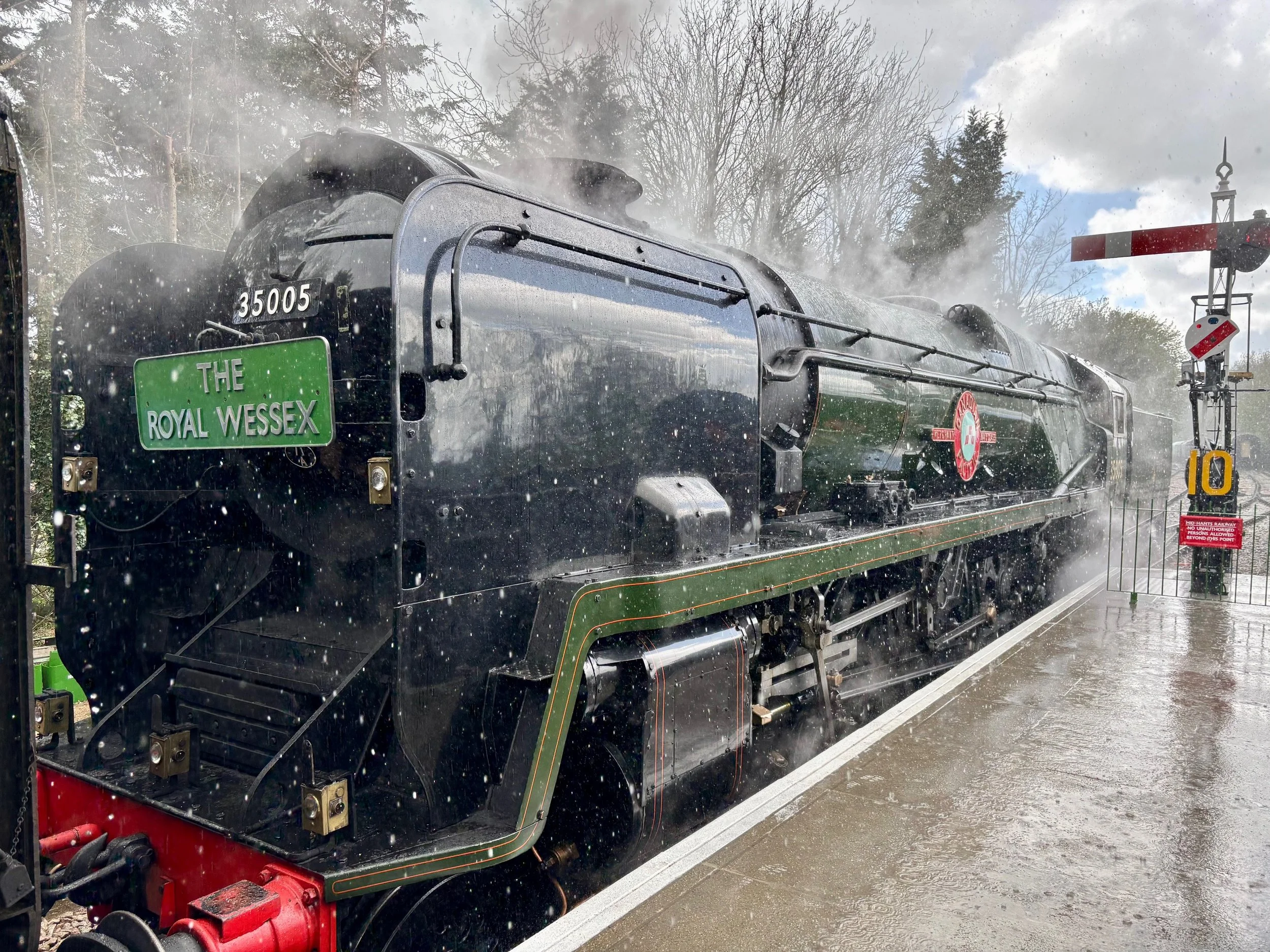
35005 again, this time at the other end of the line at Alresford after I rode the train it was hauling from Alton.
Whilst the day was mainly sunny, this arrival coincided with a heavy rain and hail shower!
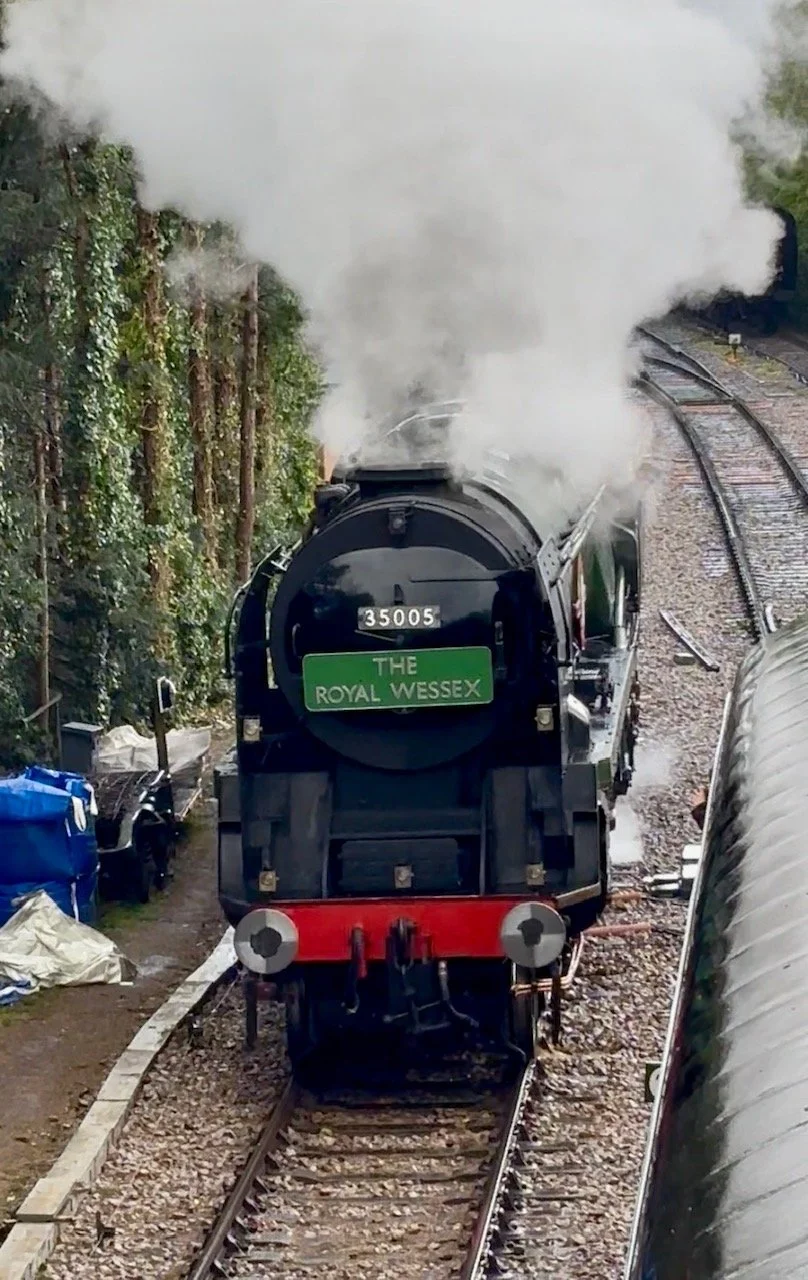
35005 seen from the footbridge at Alresford as it runs around its train for the return run to Alton. “The Royal Wessex” headboard recalls the premier BR steam express service operated from 1951-62 between London Waterloo and Weymouth/Swanage.
This loco returned to service in preservation during 2025 after a 14 year restoration project with Heritage Lottery funding.
Ride 4: Alresford - Alton
Final ride of the day was back to Alton on the 15.00 from Alresford, headed again by Merchant Navy 35005 “Canadian Pacific”. This time we passed the other train at Ropley, where unfortunately I had no time to alight and view the happenings in the engine shed. We continued on via Medstead and the summit of the line, arriving in Alton on schedule.
This had been a lively run to conclude the day, which had seen a good number of visitors of all ages riding the trains, but fortunately not so busy as to spoil the enjoyment! It was pleasing to see the volunteer staff both on board the trains and at the stations all smartly turned out, mainly in period uniforms, which added a further touch of authenticity to proceedings and who were happy to answer questions about the operation and history of the line.
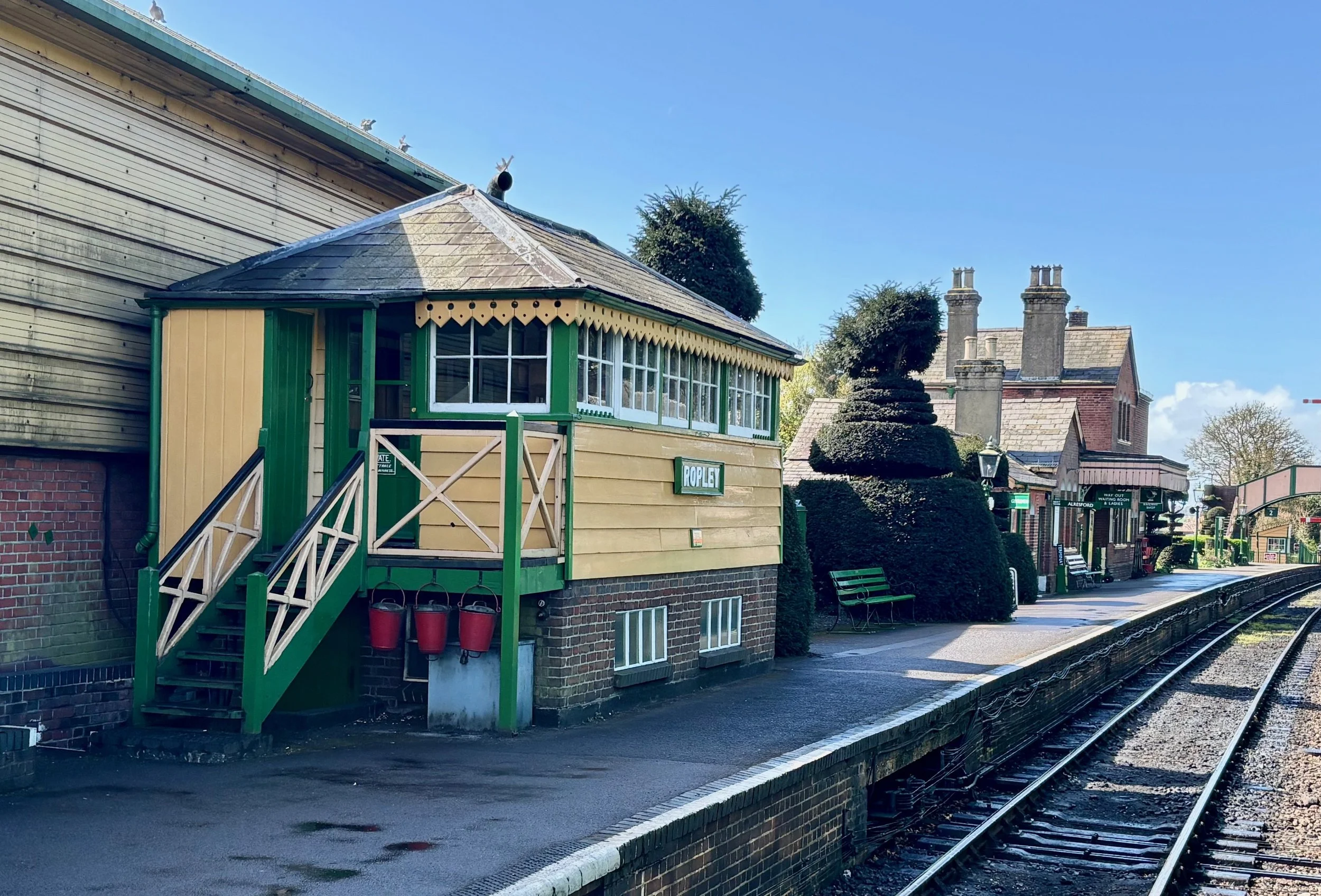
A study of Ropley Signalbox and down side station building in traditional Southern colour scheme.
Part of the engine shed can be seen behind and to the left of the box.
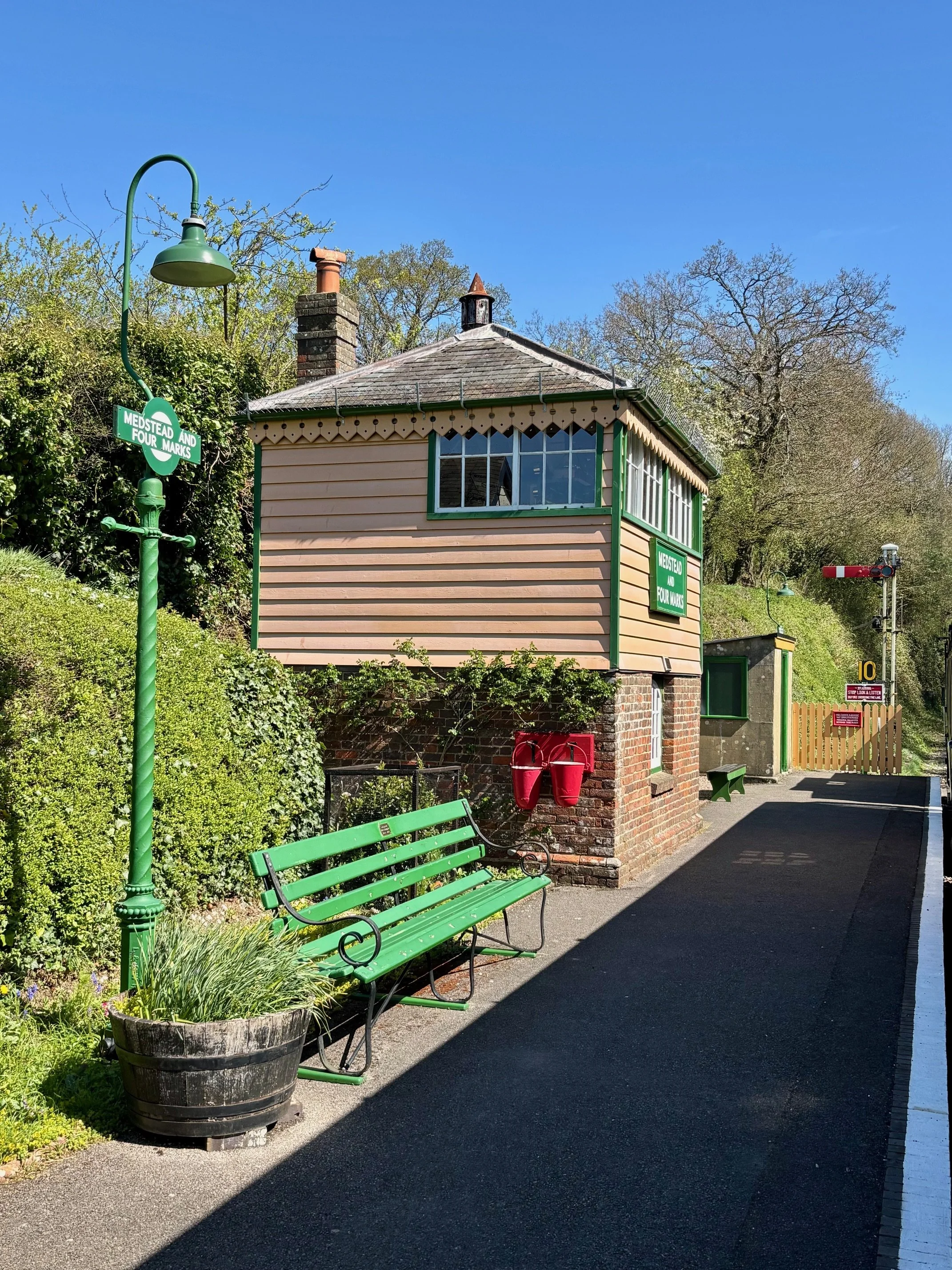
Medstead & Four Marks Signalbox from the end of the up platform.
Note the Southern Railway details including barley sugar twist lamp standard plus totem sign, the bench seat, red fire buckets and red warning notices at the end of the platform beneath the semaphore signal post.
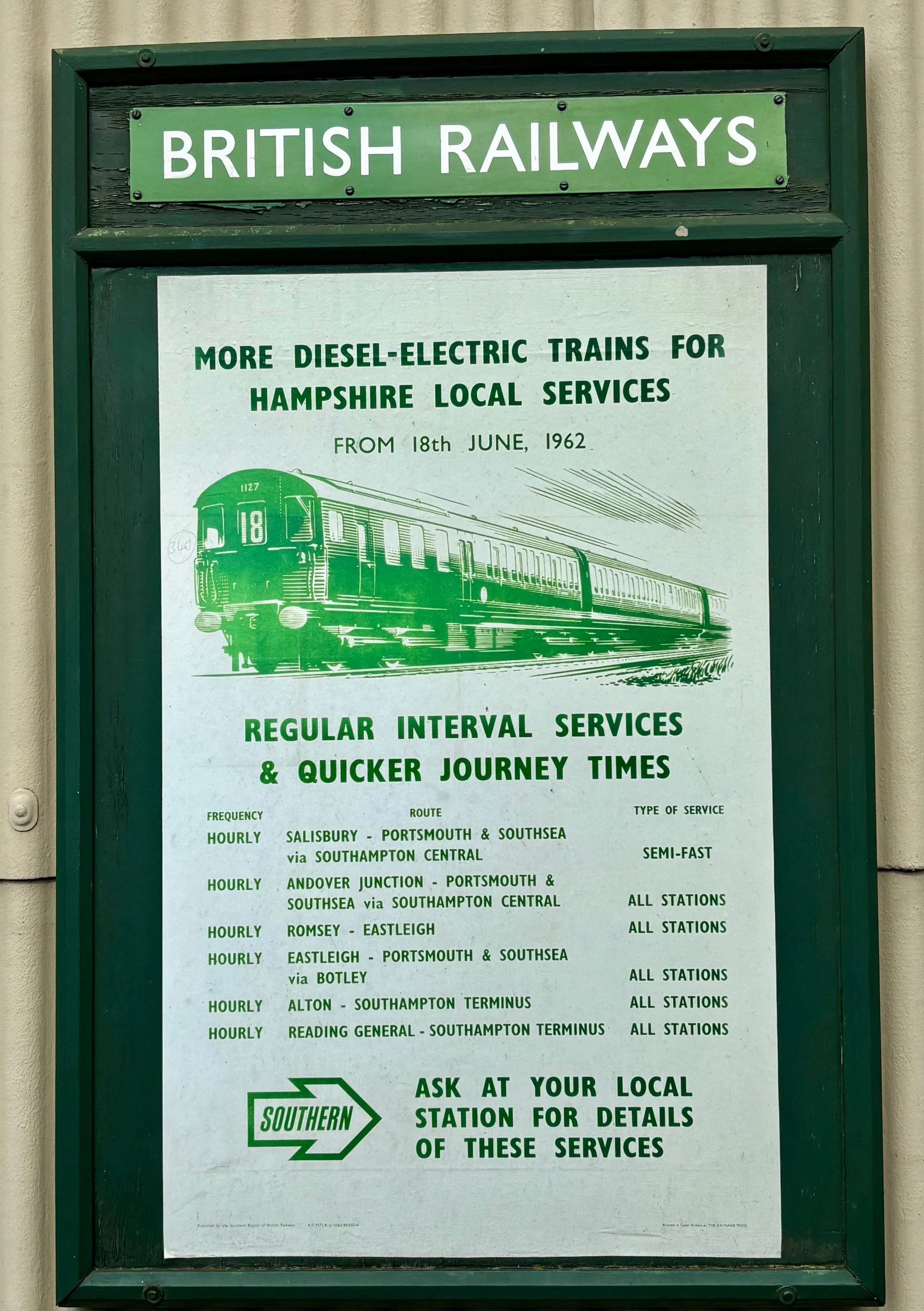
This period poster at Alton Station advertises the introduction of diesel-electric units onto Hampshire services in 1962, which included the Alton - Southampton route via the Mid Hants line.
Future of the Line
The Mid Hants originally continued beyond Alresford through Itchen Abbas to join the South West Main Line 2 miles north of Winchester. Extending the line back over this section would be extremely costly, as the original trackbed has been severed by the M3 Motorway (which would need to be crossed via an expensive tunnel or bridge), whilst several houses and gardens have been built across the route. Even if these issues could be resolved, there would be the matter of joining up with a busy electrified main line which is operating close to capacity. Therefore, further expansion seems unlikely, at least for now!
Watton
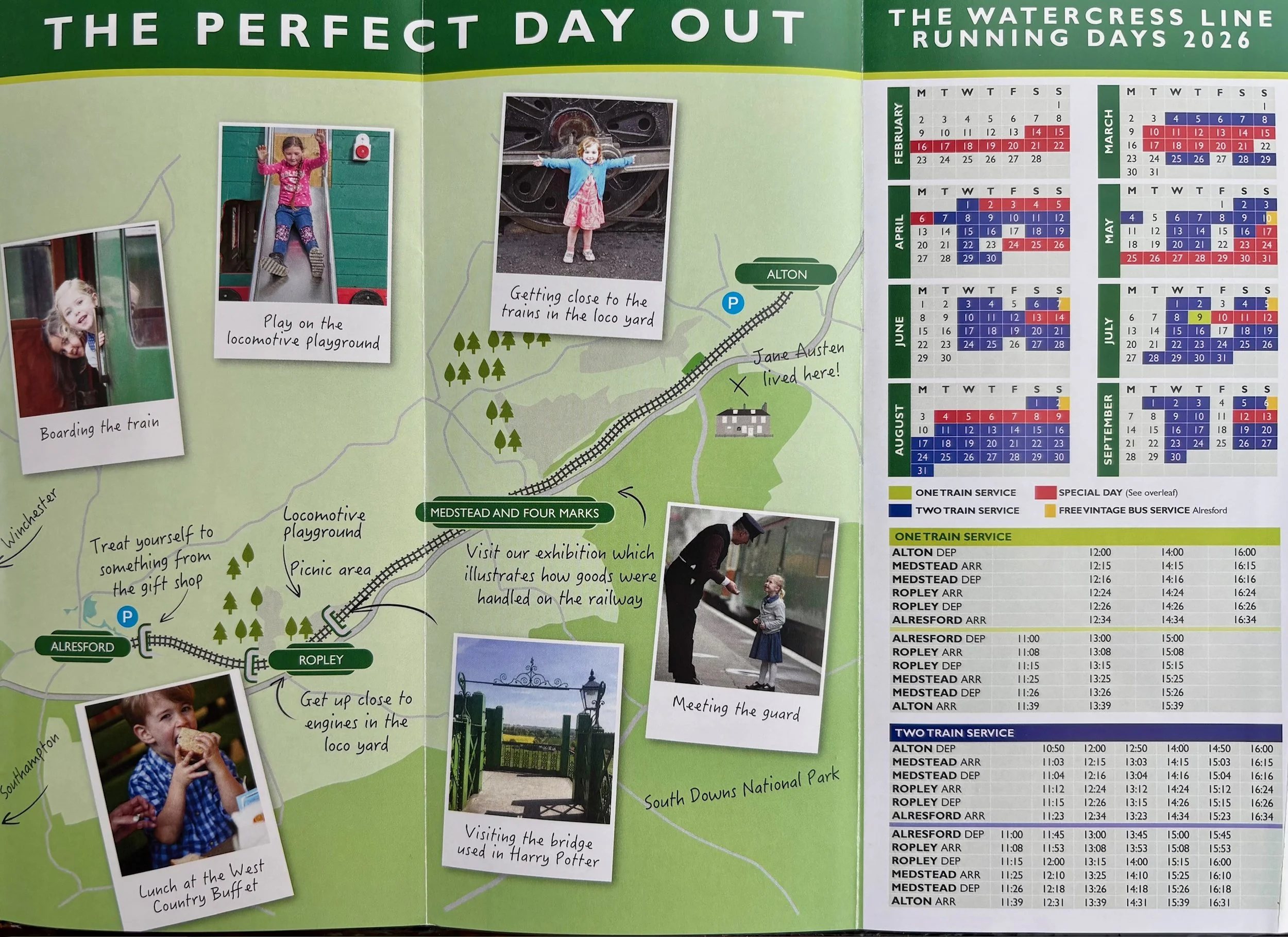
Inside of the Watercress Line leaflet showing a diagram of the route, days of operation and timetable for 2026.
